

Icing reads as texture
Name the finish and the tool: palette knife, star tip, smoothed fondant. Leave the surface open and you get a shape with no crumbs, no edges and nothing a baker can copy.
Describe the tiers, the finish and the palette, and see a photo-real cake design you can put in front of a client before anything is baked.

Prompt Guide
Model
Reference Image
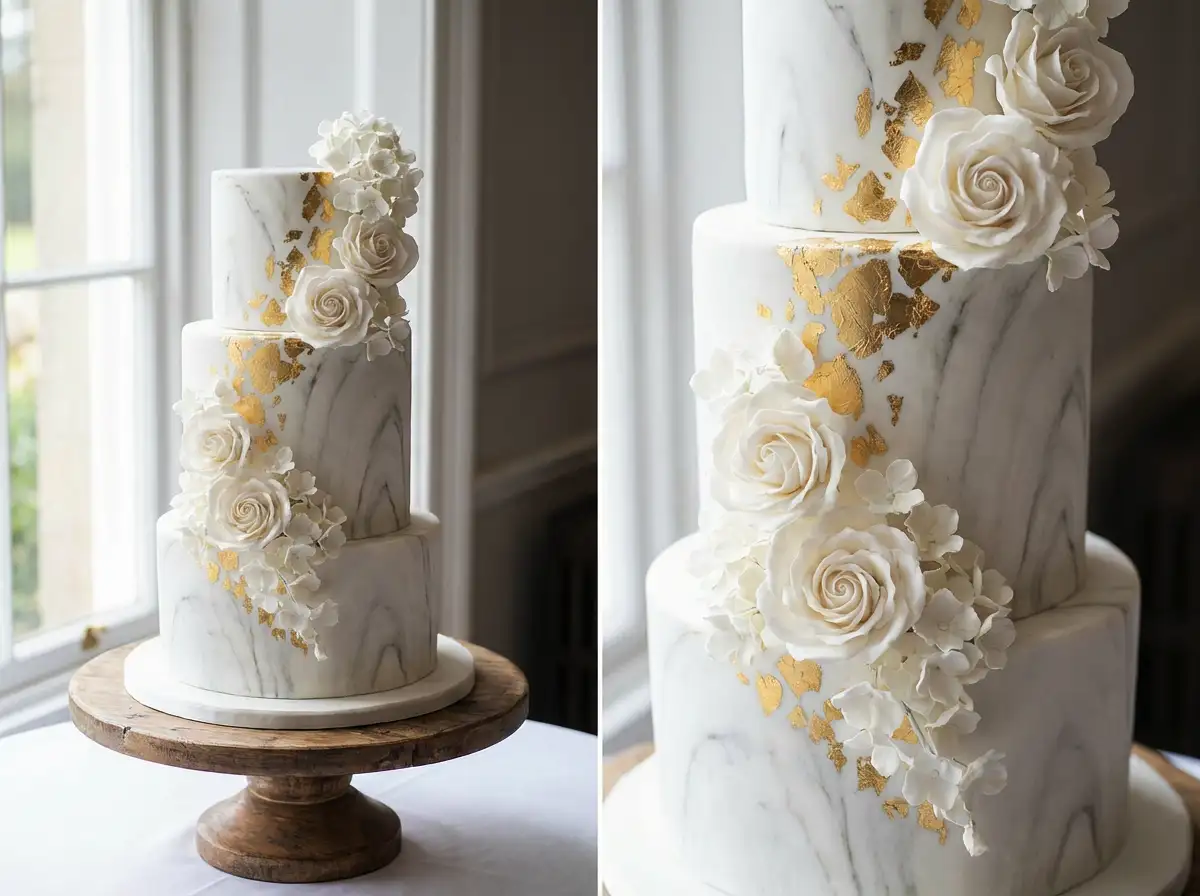
Three details decide whether the result looks baked or rendered.
Birthday, wedding, christening or bakery menu changes the height, the palette and how formal the styling should read. Put it in the first sentence.
Say swiss meringue, rough buttercream, mirror glaze or fondant. Cake images fail when the surface is left to the model, because it defaults to something between icing and plastic.
One window on the left, one soft box, or a low three-quarter view. Change one of those per retry instead of rewriting the whole prompt, or you lose track of what worked.
Each one is a prompt you can retype with your own colours.
 Storybook
A pastel pink and purple princess castle cake with toy turrets, tiny flags and sugar windows, standing alone on a plain pale background in soft even light, flat storybook illustration style, straight-on view.
Try This Style Seasonal
A frosted log cake under dripping white icing, topped with pine cones, red berries and dusted sugar, on a rustic table with candlelight and a blurred fireplace behind, eye-level festive styling.
Try This Style Wedding
A three-tier wedding cake with ivory buttercream, sculpted roses, gold leaf and sugar butterflies, set on a mossy stump in a misty forest with soft dawn light through the trees, romantic low angle.
Try This Style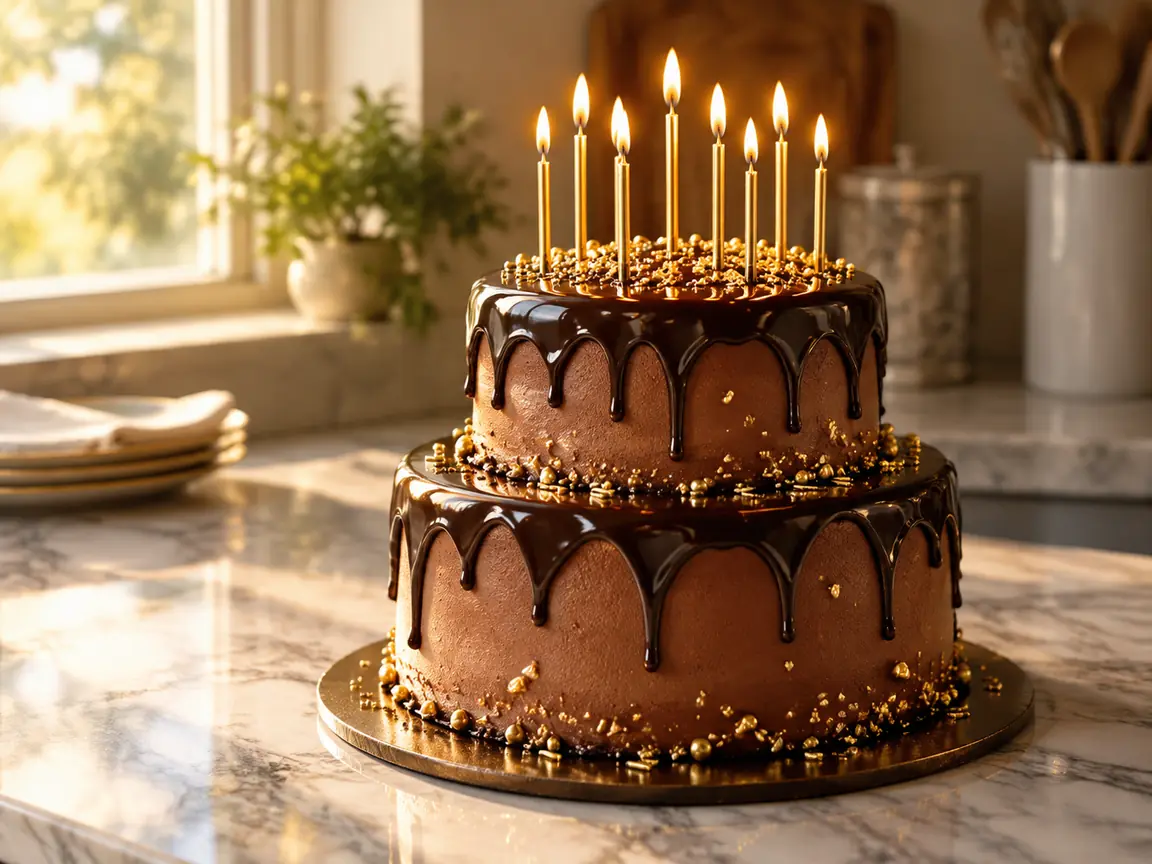 Birthday
A two-tier birthday cake with dark chocolate drip, gold sprinkles and thin lit candles on a marble counter, warm window light from the left, low three-quarter angle with shallow focus, no lettering, 3:4.
Try This Style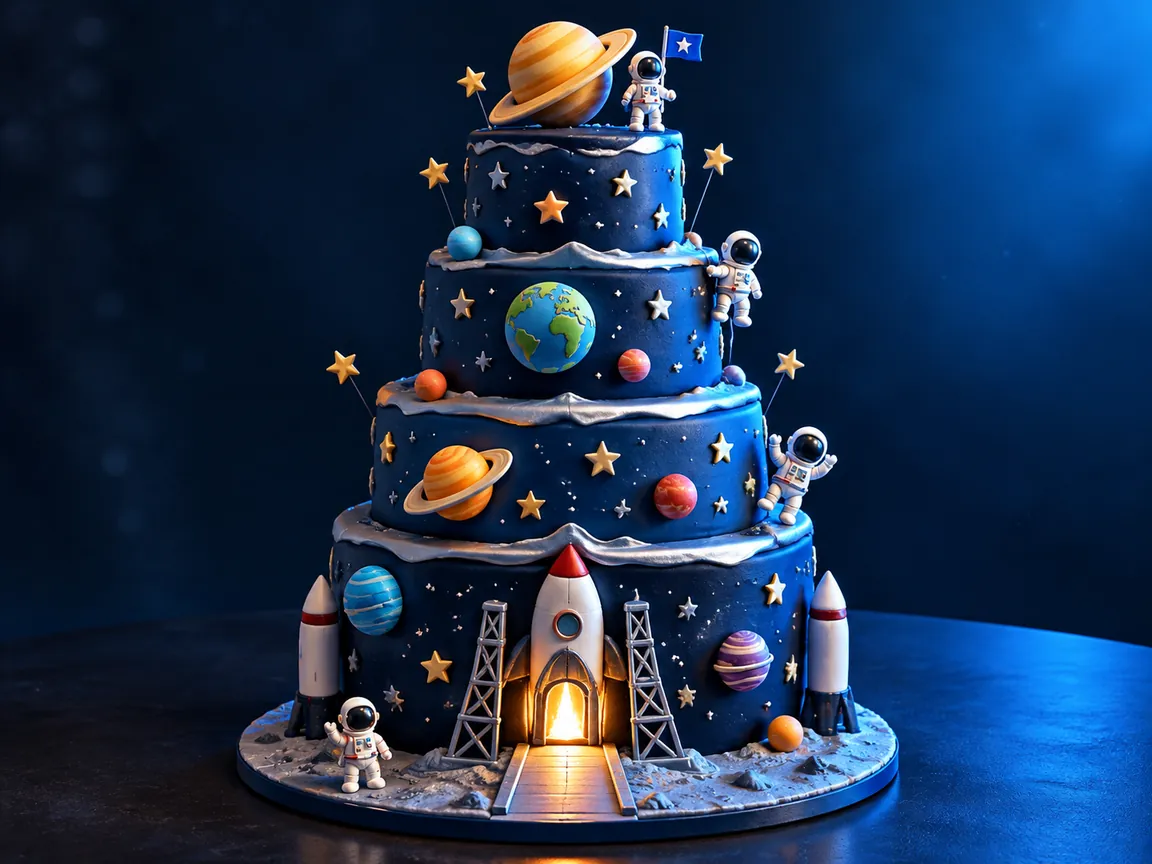 Storybook
A four-tier cake built like a rocket launch pad with sugar planets, stars and tiny astronaut figures, deep navy frosting with silver edges, floating over a dark table under blue rim light, playful storybook illustration, 3:4.
Try This Style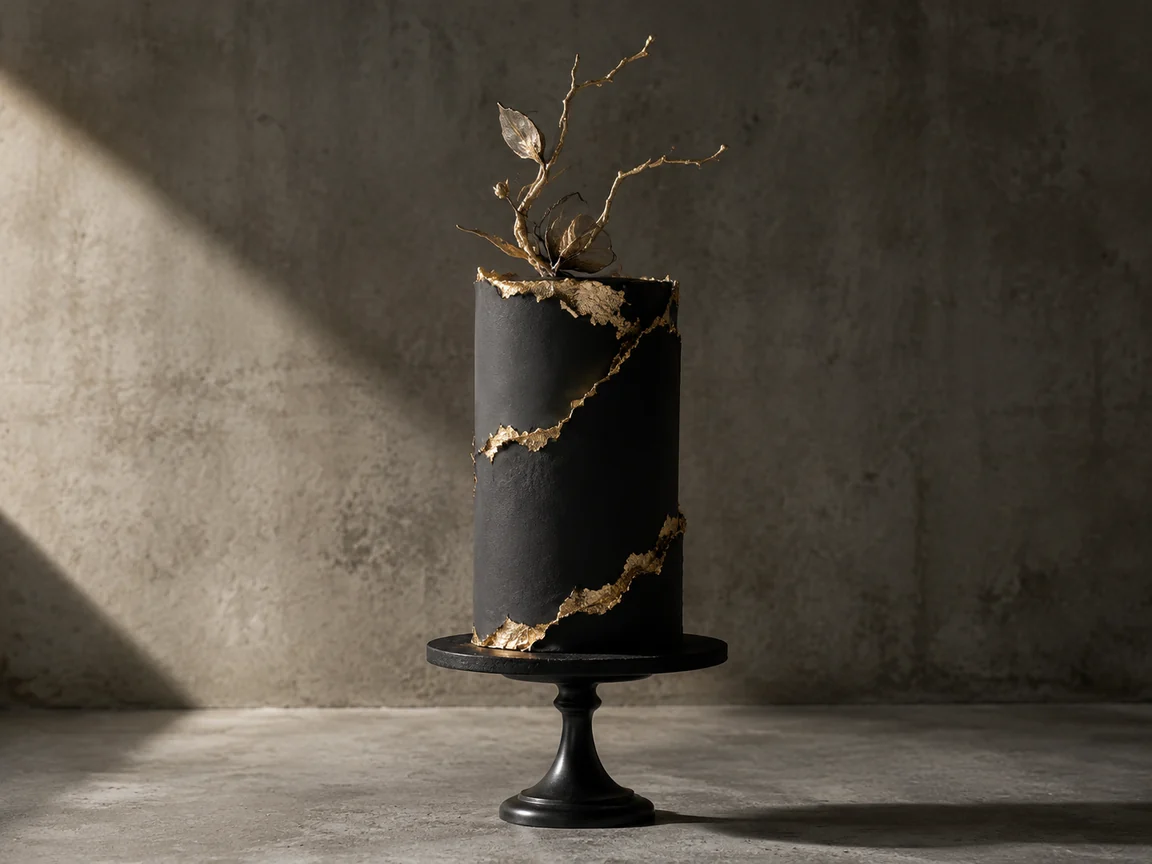 Wedding
A single tall wedding cake in black fondant with brushed gold leaf edges and a bare sculptural top, placed in an empty concrete room with one hard side light, tight centred framing, editorial dessert photography, 3:4.
Try This Style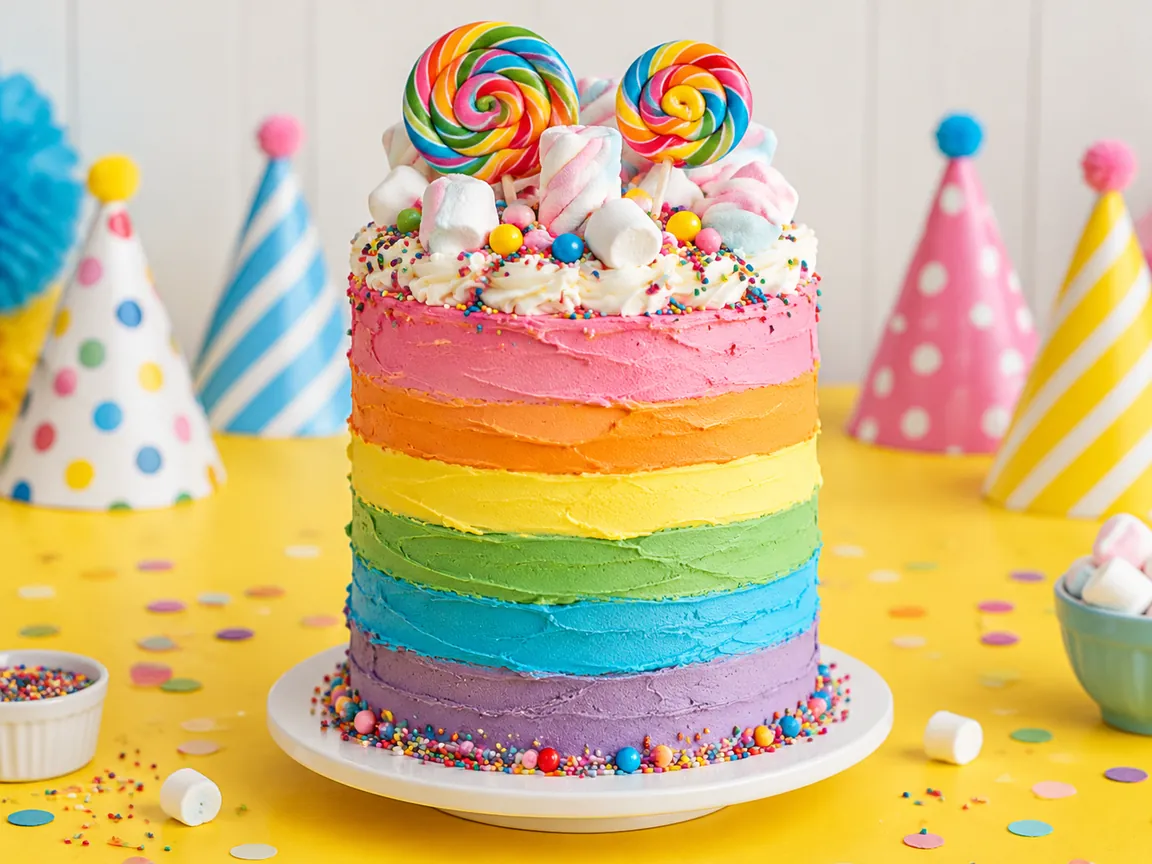 Birthday
A tall children's birthday cake with rainbow buttercream stripes, marshmallows, lollipops and sprinkles on a bright yellow table, paper party hats blurred behind, bright even daylight, straight-on view, no lettering, 3:4.
Try This Style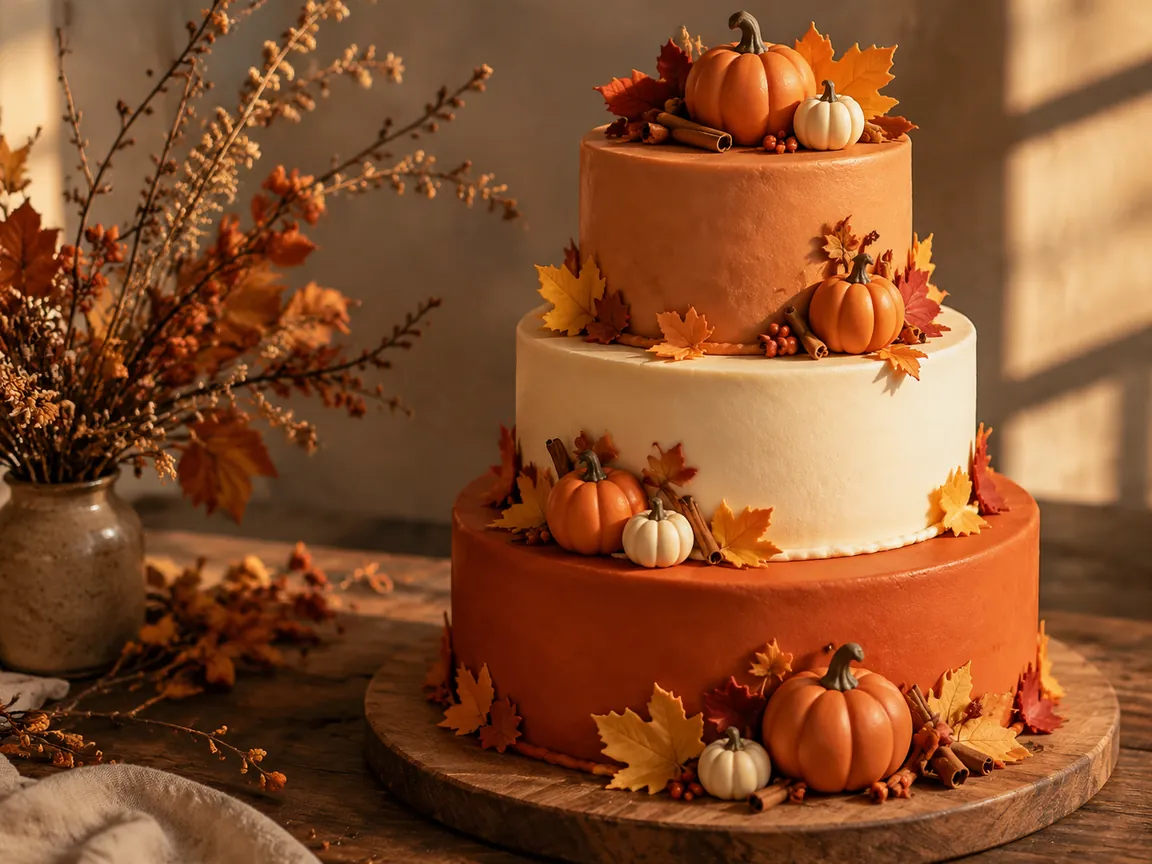 Seasonal
A three-tier autumn cake in burnt orange and cream with fondant pumpkins, maple leaves and cinnamon sticks, on a wooden board with dried branches beside it, warm low afternoon light, close three-quarter view, 3:4.
Try This Style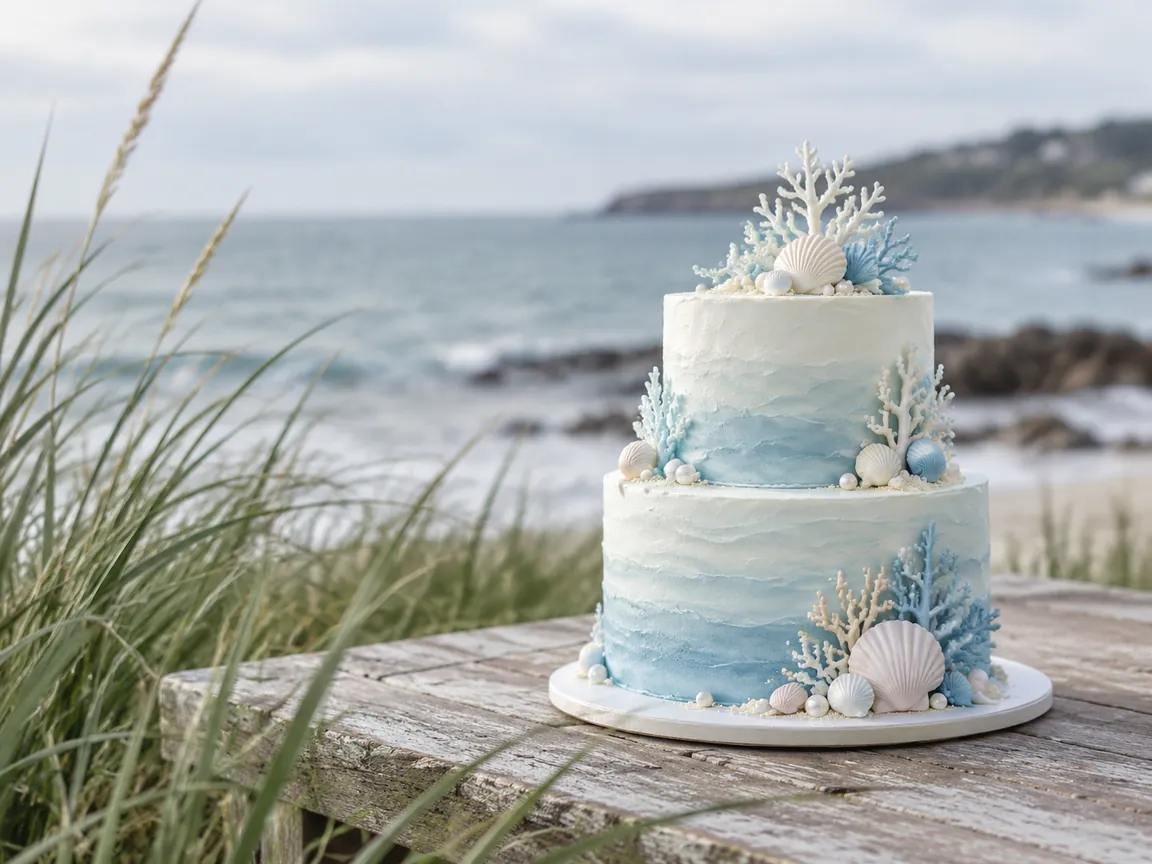 Wedding
A wedding cake with pale blue ombre frosting, sugar shells and coral details on a weathered wooden table, sea grass in the foreground and a blurred shoreline behind, soft overcast light, wide three-quarter view, 3:4.
Try This Style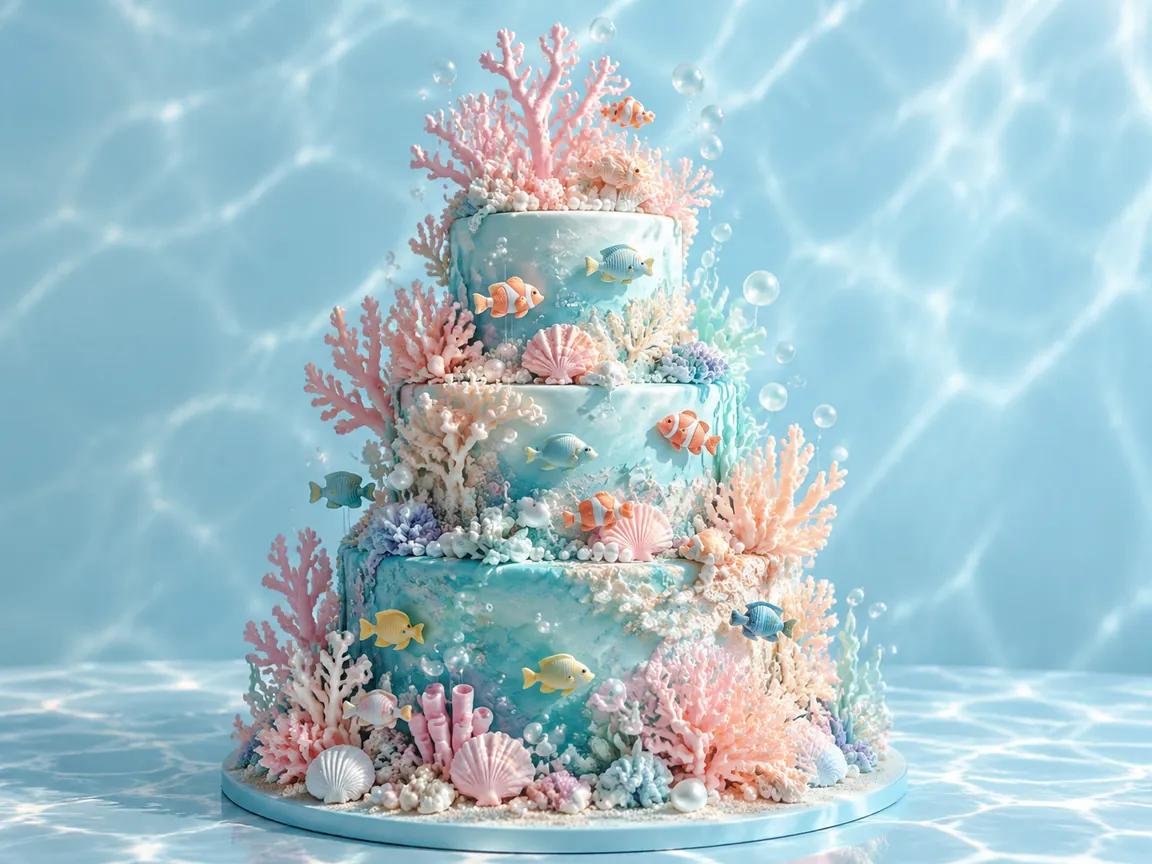 Storybook
A whimsical cake shaped like a coral reef with pastel coral branches, tiny fish and pearl bubbles climbing the tiers, aqua and pink palette on a pale blue backdrop, shifting underwater light across the surface, no lettering, 3:4.
Try This StyleSix decisions that separate a client-ready picture from a pretty accident.
Name the finish and the tool: palette knife, star tip, smoothed fondant. Leave the surface open and you get a shape with no crumbs, no edges and nothing a baker can copy.
A single window, a soft box, or late afternoon sun. Two competing light sources flatten the tiers and make a four-tier cake look like a cardboard cut-out.
Give the base colour and one accent, then repeat both words in every retry. Three or more colours drift between runs and the concept stops matching itself.
Lettering on a cake comes back smeared or mirrored. Keep the surface clean and add the name or date in your own layout afterwards.
Low three-quarter for a client pitch, straight on for a menu card, flat lay for a social post. The framing is a decision you make, not a detail you leave to the model.
Rewriting the whole prompt hides which word did the work. Keep the sentence and swap the height, the frost colour or the light, then compare the two images side by side.
I needed a storybook concept the same afternoon I found this page. I typed what I wanted for "Pastel Castle Cake", ran it twice, then changed only the light and the palette on the second pass. The version I kept went straight into a client deck and saved me a stock-photo search.
My first try for "Rocket Launch Tiers" came back too polished, more advertising than real photograph. I rewrote the sentence to describe the surface and the actual light in the room, and the third attempt looked like something I could have shot myself. That is the one I still use for ai cake generator mockups.
I use it the way I use a sketchbook: one prompt for "Rainbow Party Stack", one for "Autumn Pumpkin Tier", then I pick the half that works and iterate from there. Two of those frames ended up in a package for a client who could not decide between the two directions, and seeing them side by side settled it in a minute.
Yes, but send it as a concept, not a build sheet. Name the tiers, the finish and the palette in separate sentences so the baker can say what is buildable. A single perfect render often hides structural tricks that fondant cannot repeat.
You can open the workspace and run prompts on the free allowance, and the model picker shows which models are on it. Paid models start around $5.80 a month, and downloads carry no watermark.
Do not put lettering in the prompt. Lettering is the least reliable part of any image model. Generate the cake with clear space on the top tier, then set the name in a design tool and hand that layout to the baker.
Light and surface usually fail before shape does. Ask for a named light (window light from the left, soft overcast, one warm lamp), a real surface such as marble or linen, and a cut slice so the eye gets texture and scale.
Check the licence of the model you used, and never present a rendered cake as one you baked. They work well for mood boards, flavour concepts and client approvals; photograph the real cake for anything you sell.