

Wardrobe First
Every prompt names the garment and its material, because fabric decides where the highlight lands more than the pose does.
Describe the wardrobe, the light and the pose, and get a magazine-style boudoir portrait you can hand to a client.
Prompt Guide
Model
Reference Image

Four steps, no studio booking.
Name the garment, the room and one light source. Silk robe, white room, window light is enough to start.
4:3 for a wide editorial crop with room for type, 3:4 for a full-length portrait. Keep one ratio across the whole set.
Re-run any frame where fingers blend together or a catchlight goes missing. Two passes usually settle it, and image-to-image lets you keep the pose.
Download the largest file the model returns and save the prompt beside it, so the next look in the series can be matched exactly.
Studio setups, fabric close-ups, location sets and moody low-light tests.
 Studio Light
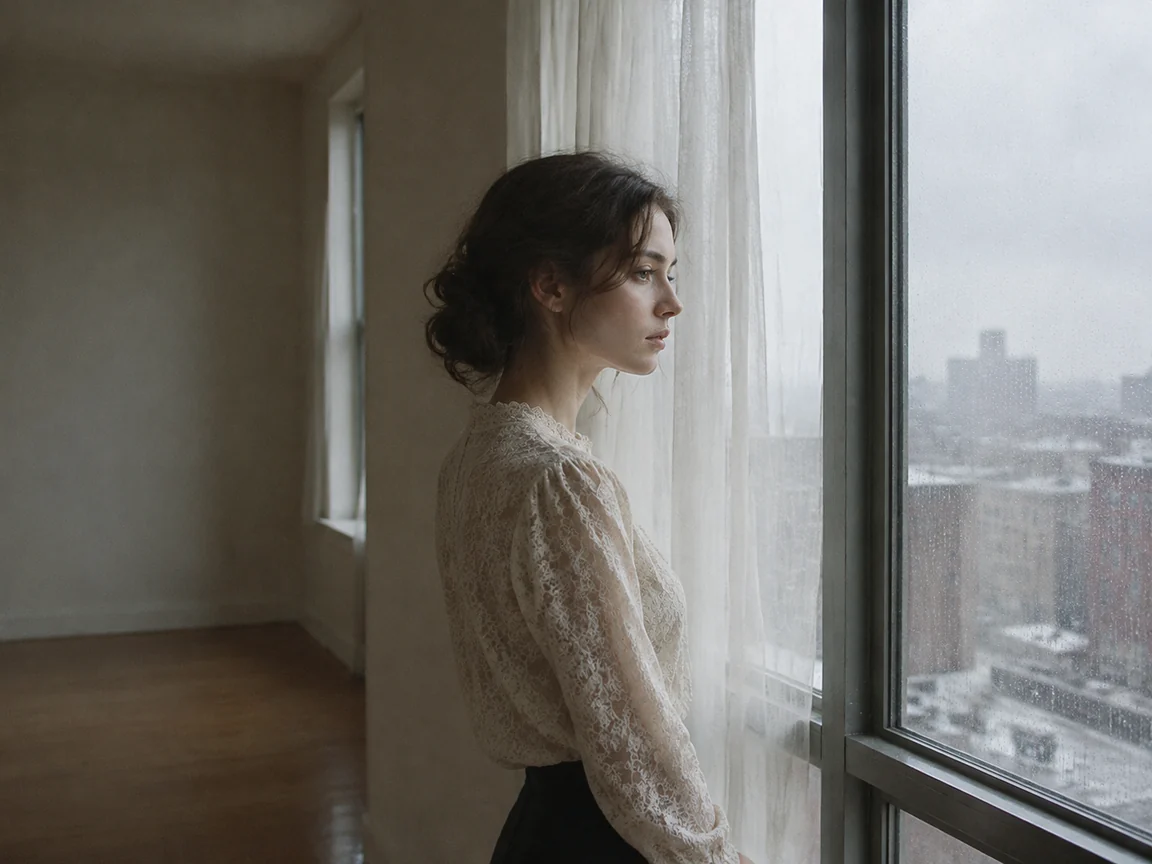
A woman in a cream lace blouse stands at a tall window in an empty apartment, wet grey daylight behind her, a thin curtain diffusing the highlight, quiet film portrait, 3:4
Try This Style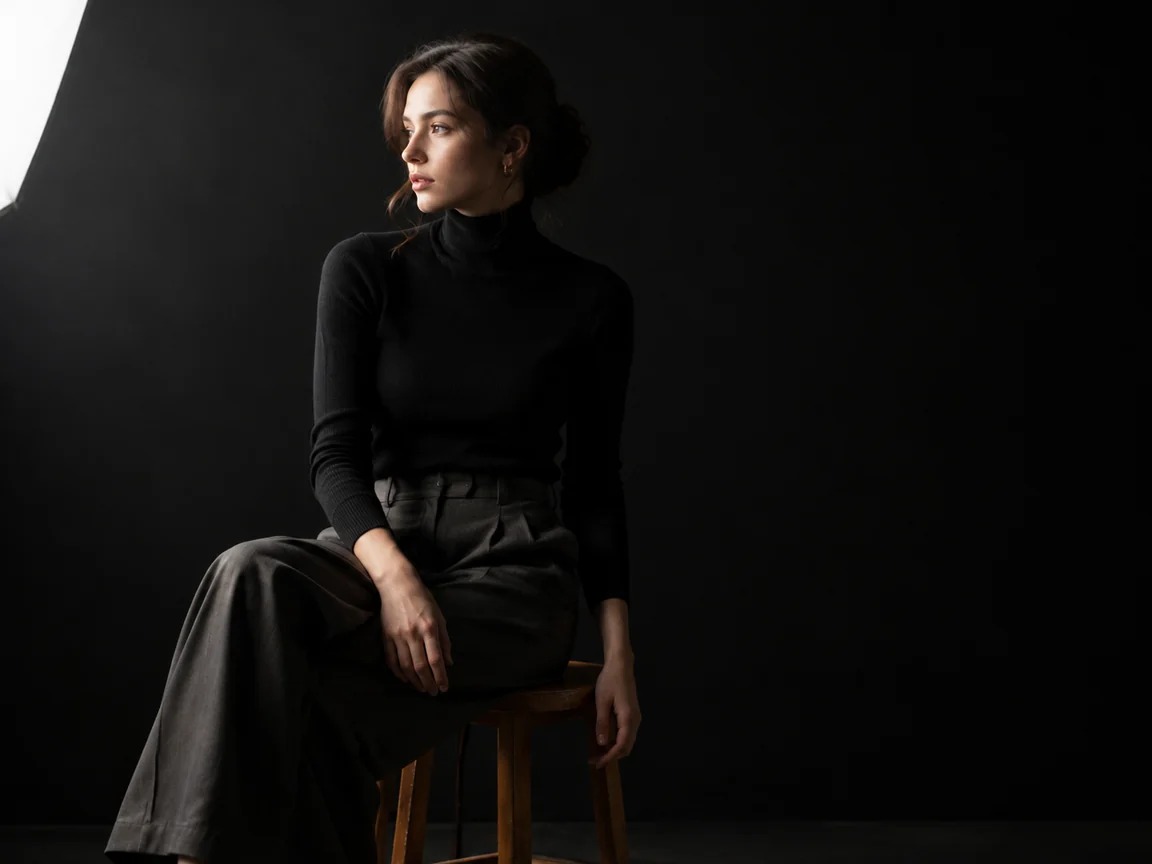 Studio Light
A woman in a black turtleneck and pleated trousers sits on a wooden stool in a black-walled studio, hard single softbox from the left, deep unlit shadow side, 3:4
Try This Style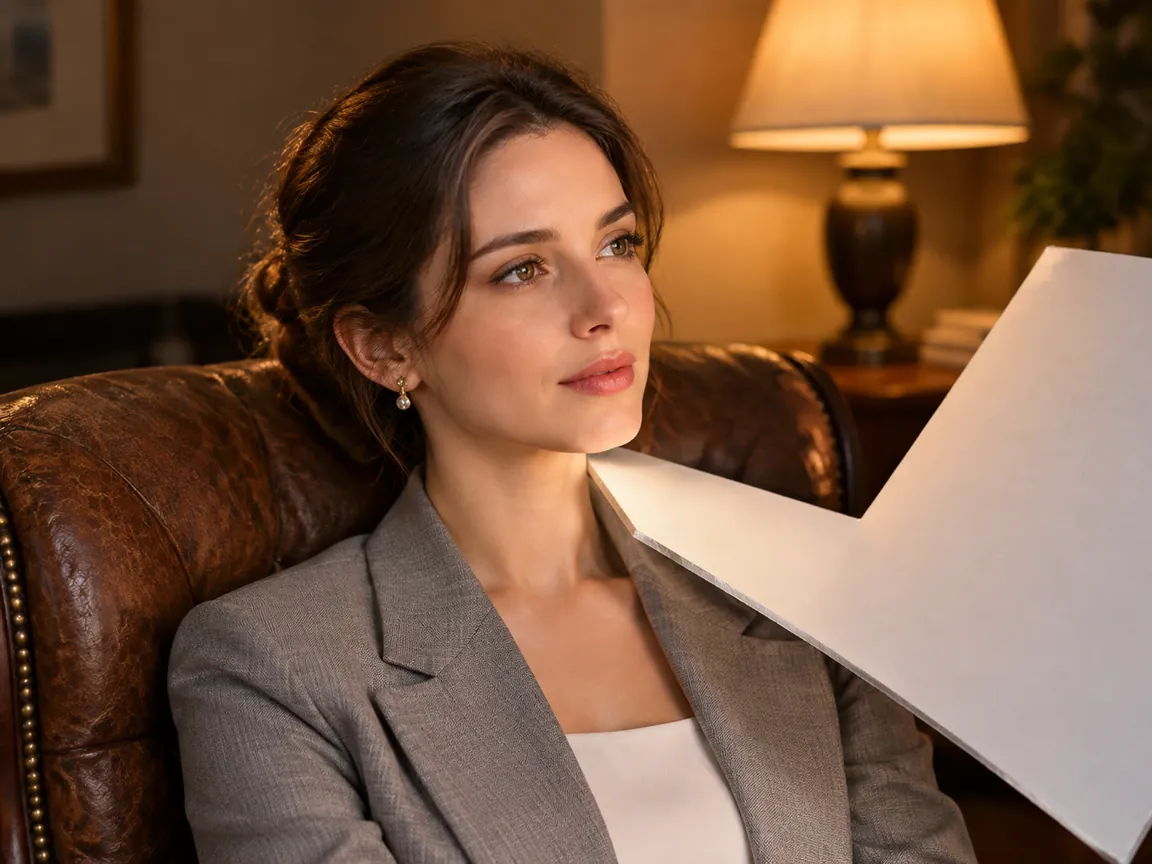 Studio Light
A woman in a dove-grey blazer sits in a worn leather armchair, a white bounce card filling the shadow under her jaw, warm tungsten lamp glow behind, 3:4
Try This Style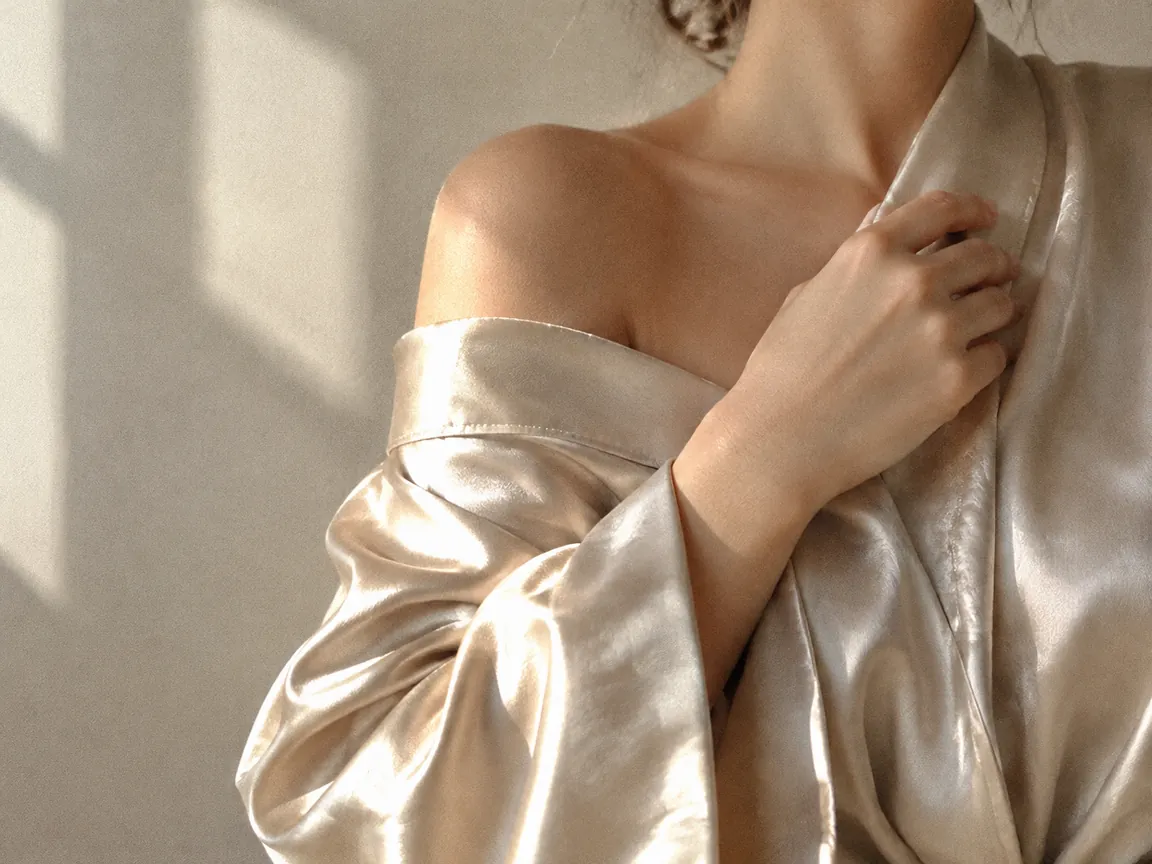 Fabric Study
Close crop of a champagne silk robe drawn up over one shoulder, sleeve folds catching window light, a hand adjusting the collar, plain neutral wall behind, fine grain, 3:4
Try This Style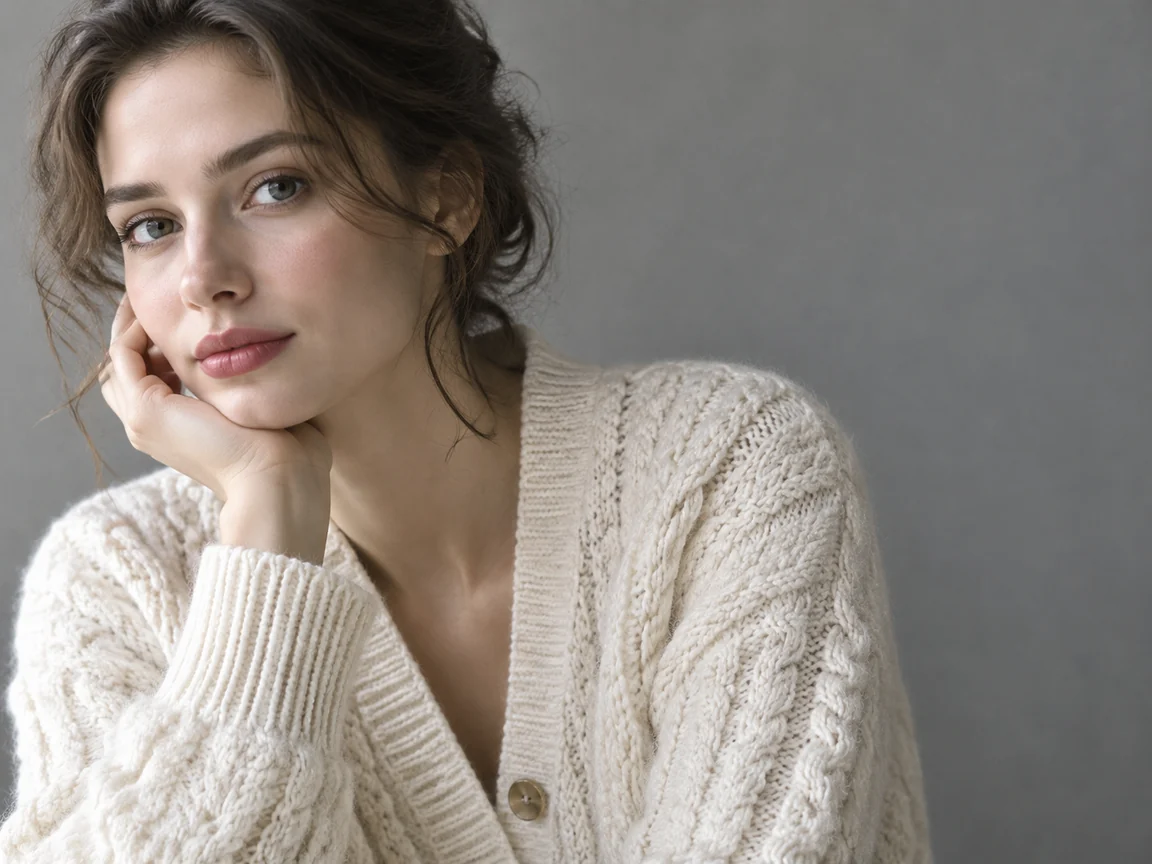 Fabric Study
Half-frame portrait of a woman in a cable-knit cream cardigan, chin resting on her hand, soft north light revealing the wool loops, muted grey background, 3:4
Try This Style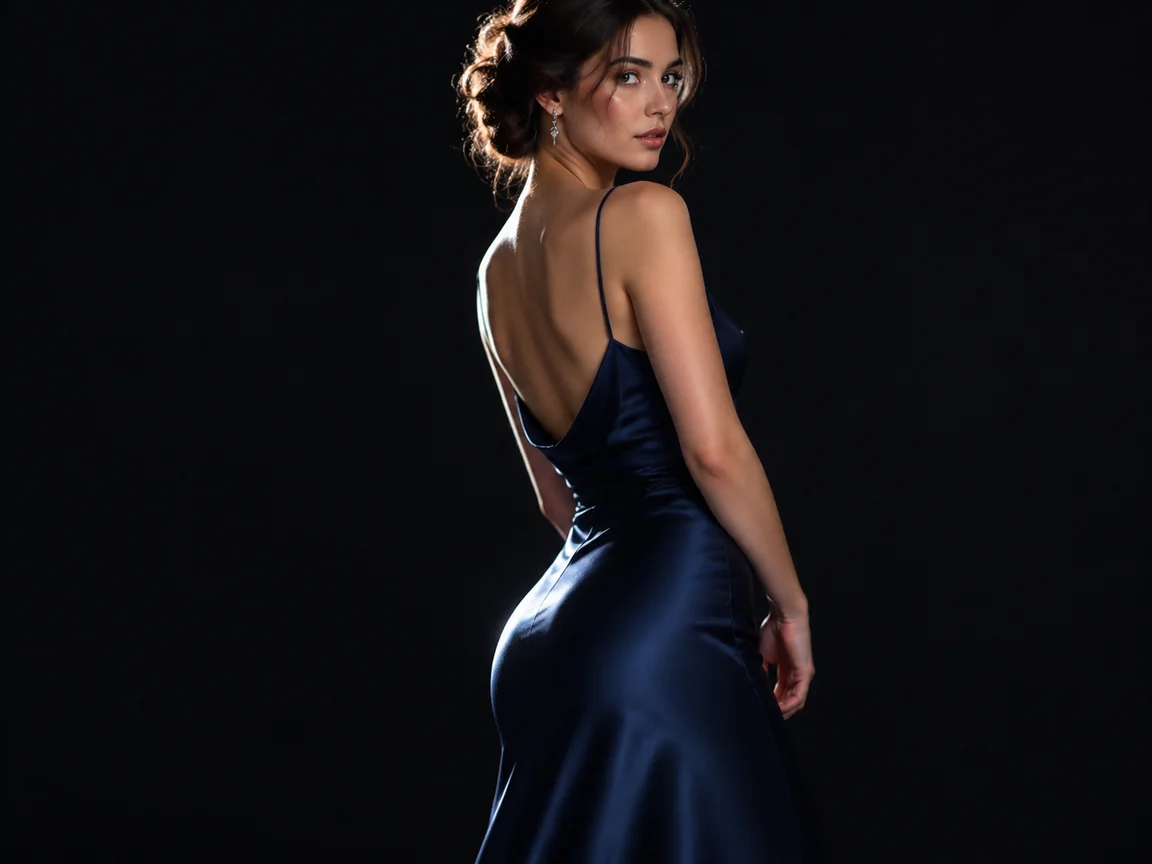 Fabric Study
A woman in a bias-cut navy satin gown turns at the waist, the fabric catching a hard rim light along the hip, dark background, 85mm compression, 3:4
Try This Style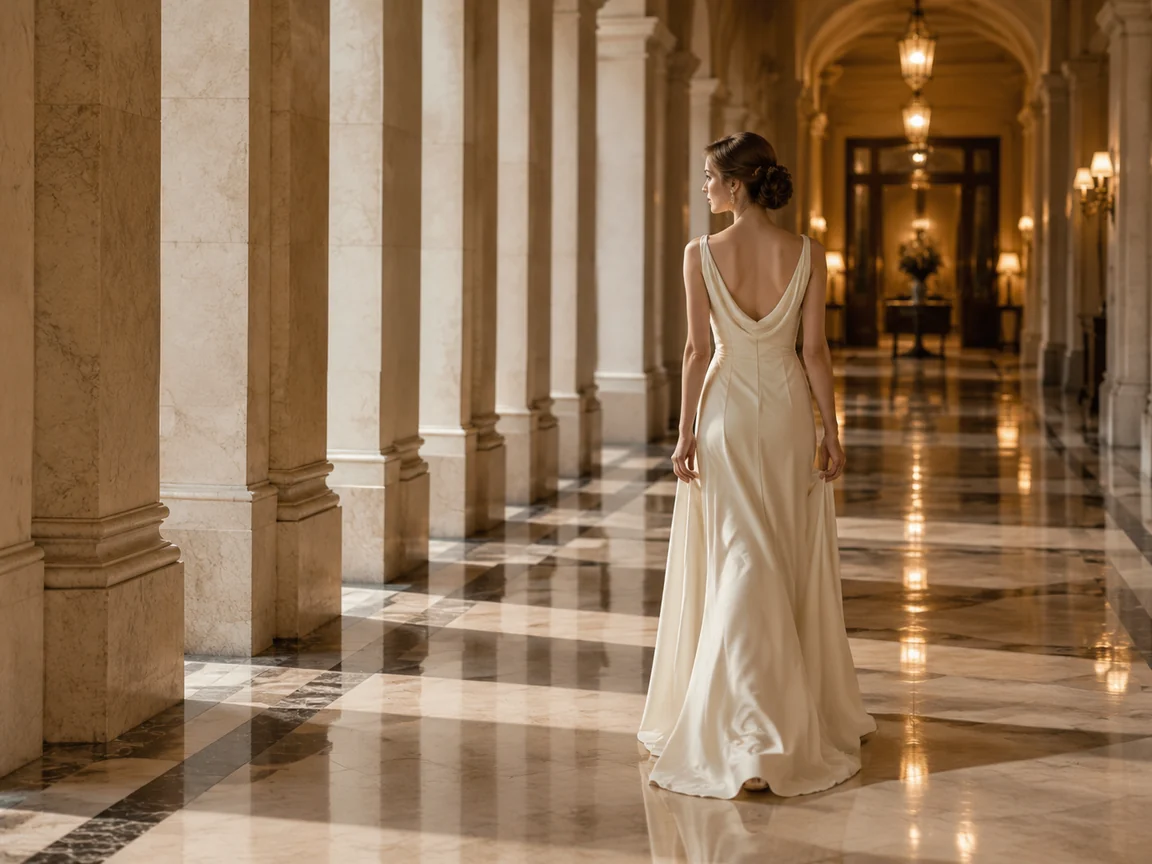 Editorial Sets
A woman in a floor-length ivory gown walks a marble hotel corridor, column shadows repeating behind her, warm practical lights at the far end, wide 35mm view, 3:4
Try This Style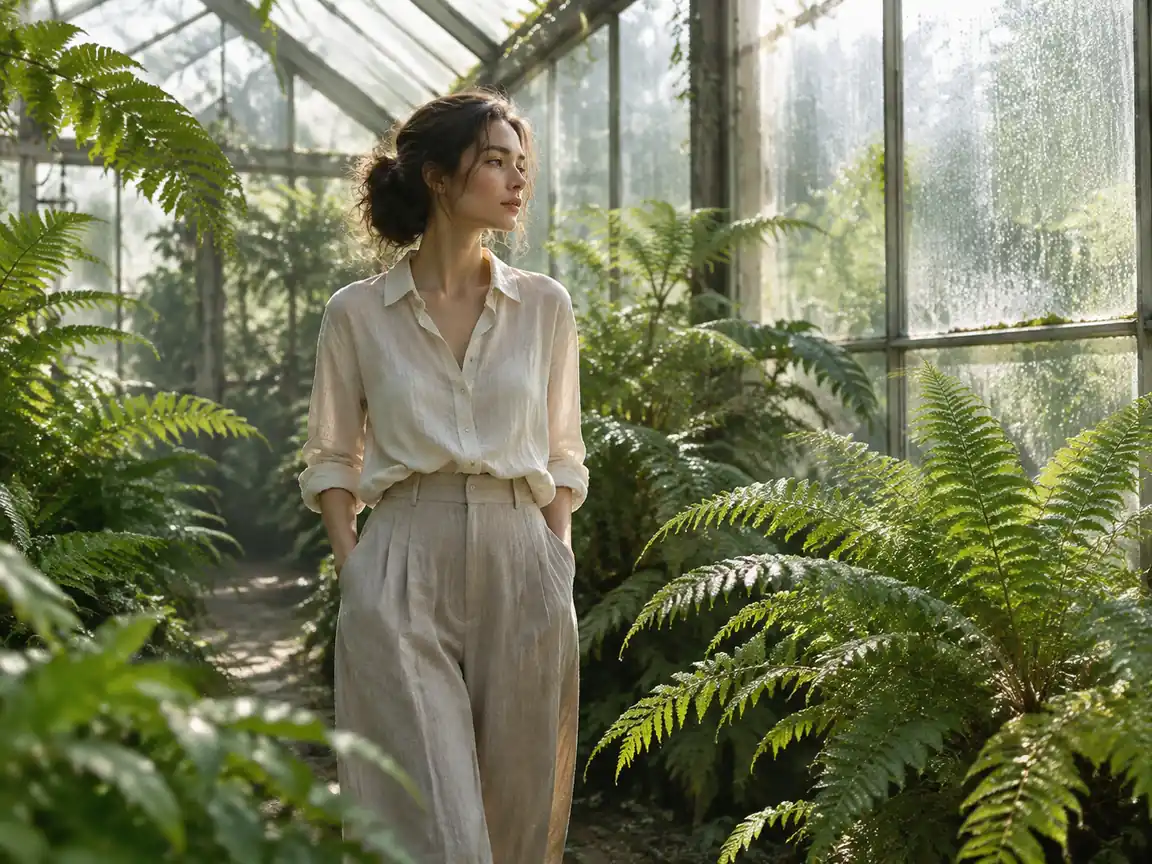 Editorial Sets
A woman in a linen shirt and wide trousers stands among fern fronds in a glasshouse, humid morning light through the roof panes, condensation on the glass, 3:4
Try This Style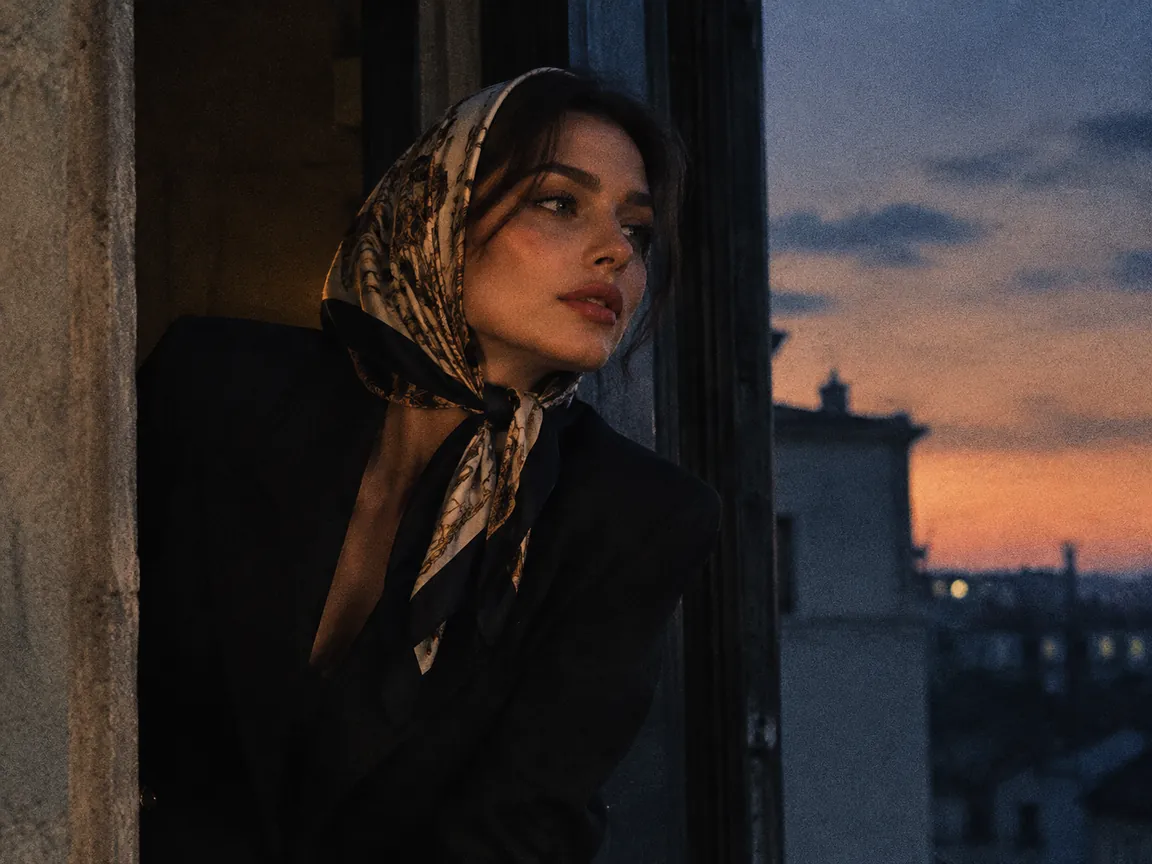 Mood & Grain
A woman in a silk scarf and dark blazer leans out of a doorway into dusk, available light only, pushed 800-speed grain, cool shadows against warm skin, 3:4
Try This Style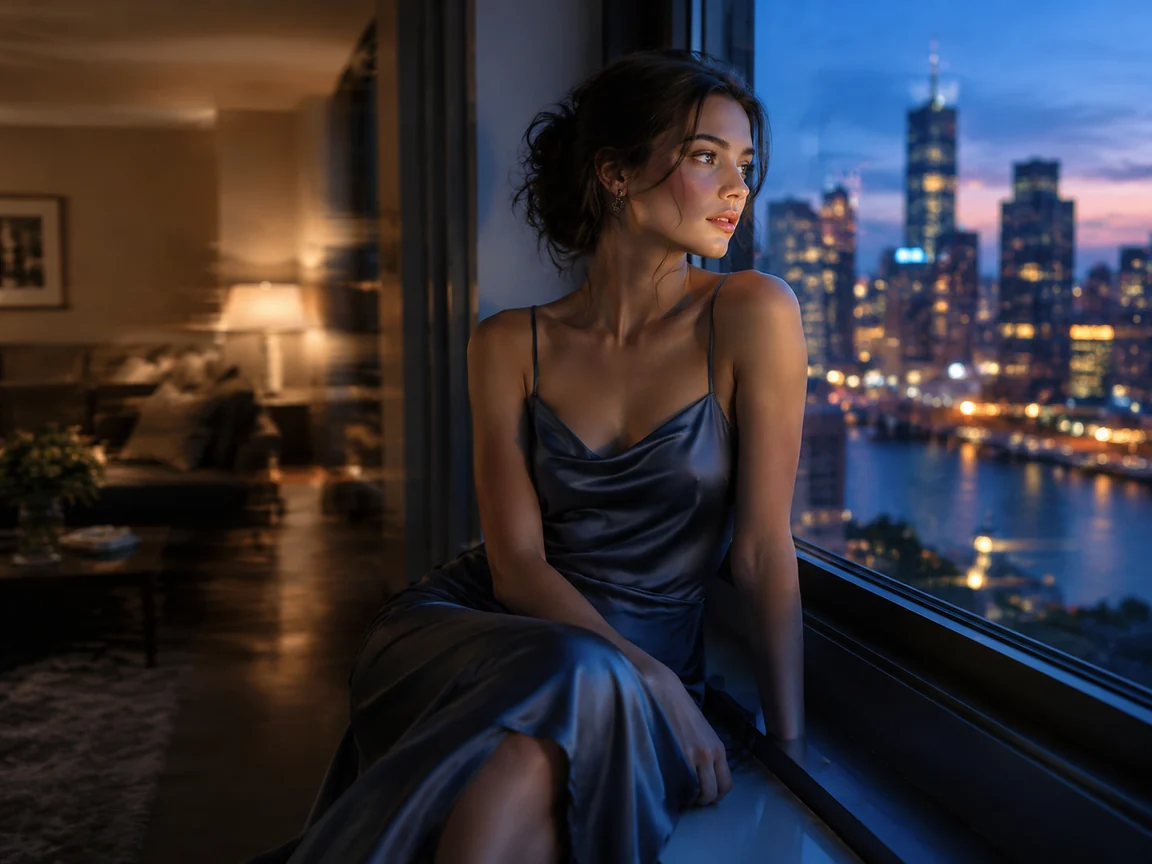 Mood & Grain
A woman in a slate silk dress sits on a deep windowsill during blue hour, city glow on one side of her face, slow-shutter softness in the room behind, 3:4
Try This StyleSix rules we apply before a frame is rendered.
Every prompt names the garment and its material, because fabric decides where the highlight lands more than the pose does.
A single window or softbox gives a readable shadow. Three lights flatten a face into a catalogue shot with no mood left.
Resting a hand on a collar, a cup or a doorframe gives fingers something to hold and stops the melting that ruins an otherwise good frame.
Film grain is added by the prompt in small amounts. Heavy grain hides skin texture instead of adding atmosphere.
One ratio per set. Mixed crops read as a scrapbook, which is the quickest way to make a portfolio look assembled.
Frames that arrive with lettering or a fake watermark are rejected and re-run, since they cannot be used on a page or a print.
I needed a studio light concept the same afternoon I found this page. I typed what I wanted for "Window Lace Portrait", ran it twice, then changed only the light and the palette on the second pass. The version I kept went straight into a client deck and saved me a stock-photo search.
My first try for "Knit Texture Detail" came back too polished, more advertising than real photograph. I rewrote the sentence to describe the surface and the actual light in the room, and the third attempt looked like something I could have shot myself. That is the one I still use for ai boudoir image generator mockups.
I use it the way I use a sketchbook: one prompt for "Marble Hall Gown", one for "Greenhouse Morning", then I pick the half that works and iterate from there. Two of those frames ended up in a package for a client who could not decide between the two directions, and seeing them side by side settled it in a minute.
Check the data policy of the tool you use before uploading, and never upload images of someone who has not agreed. This page starts from written description, so you can work without uploading anything at all.
Describe wardrobe as fabric: silk robe, oversized shirt, knit, and add studio light plus a seated or side-on pose. Explicit wording is what triggers safety reviewers and gets a generation refused.
Yes. A written prompt gives a studio-style portrait of a model who is not you. If the face has to be yours, you need a reference image, and that is a separate decision about privacy.
Clothed editorial imagery generally passes. Requests that read as nudity or explicit posing are refused by the model's safety layer, so stay with wardrobe, light and pose and you will rarely hit it.
You can test on the free allowance; paid models start around $5.80 a month and the download has no watermark.