

One Face Set
Four styles on one face is a decision. Four styles on four faces is a mood board, and it will not tell you which one suits your jaw.
Prompt Guide
Model
Reference Image
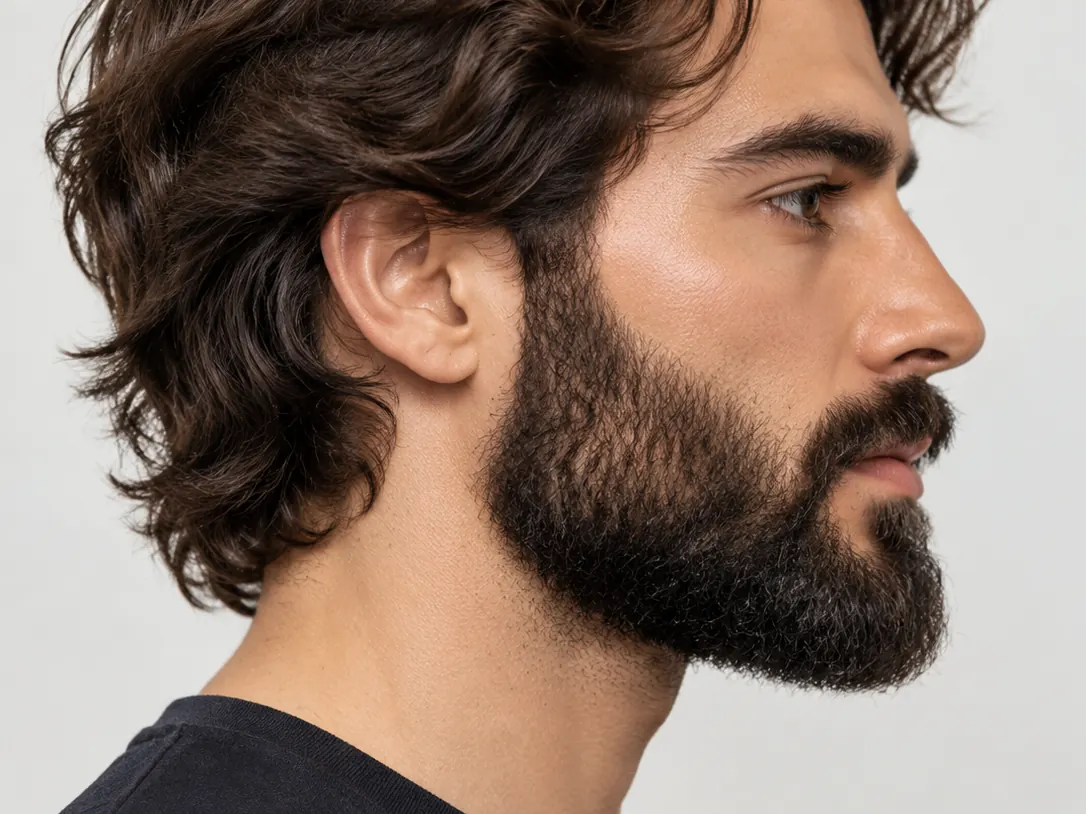
Describe a face and a style, and get a portrait under one side light, so the beard shape, the cheek line and the neckline can be compared before you commit.
Face, beard, then lighting.
One face, described once: jaw shape, chin width, cheek. Changing the face between styles makes the comparison useless, because the beard is not the only variable.
Full beard, heavy stubble, goatee, moustache, or a barber term such as a chin strap. Vague words like rugged return a different shape on every run.
Keep the same side light for every version. Light is what shows the cheek line and the shadow under the jaw, and a change of light reads as a change of beard.
Put the frames next to each other at the same crop. Two styles that look different alone often look nearly the same when the jaw is the only thing in view.
Ten faces across four beard shapes, all lit from the same side so the styles can be compared.
 Studio
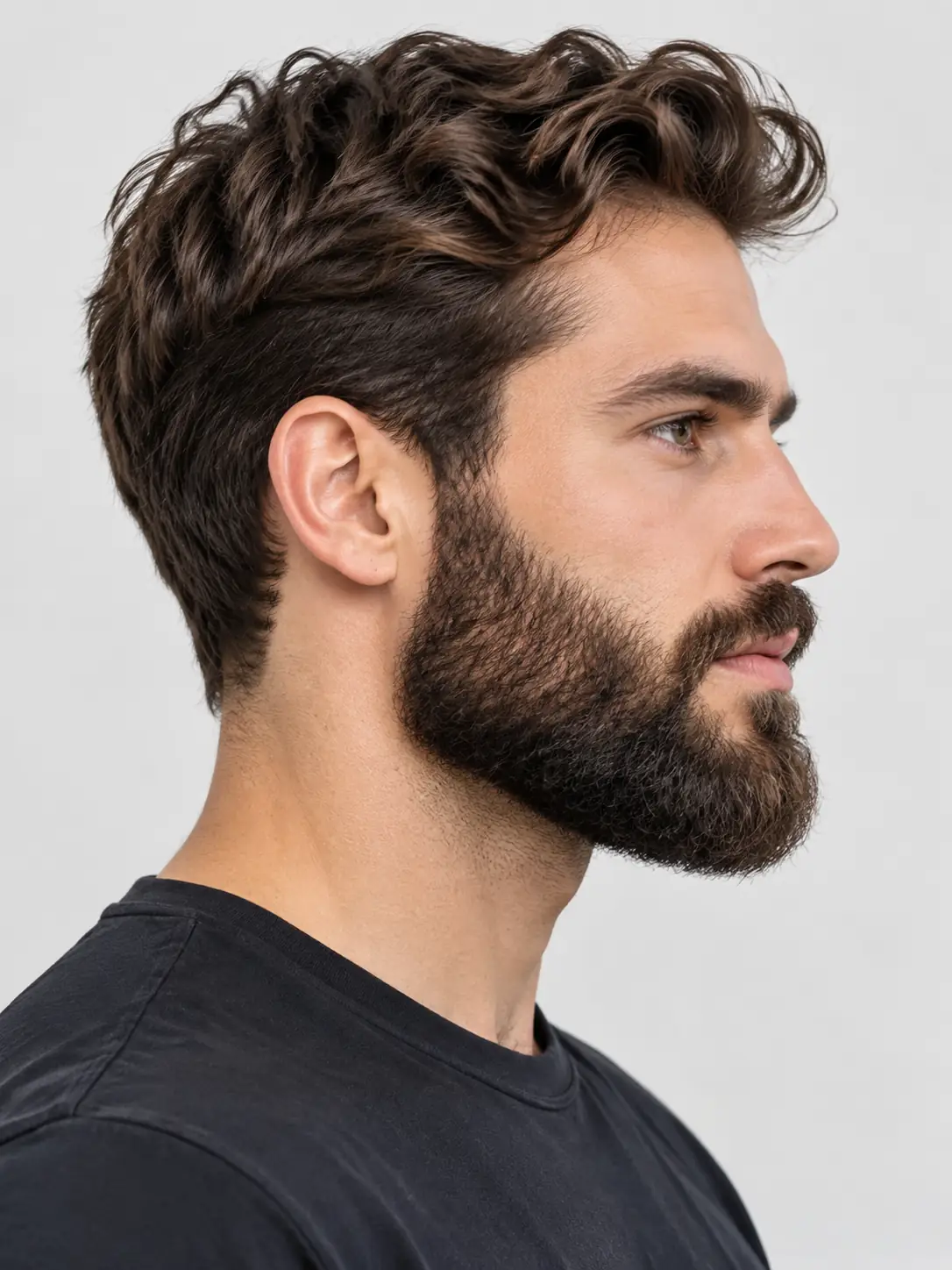
Side profile with a dense full beard, defined cheek line, neutral daylight, 3:4
Try This Style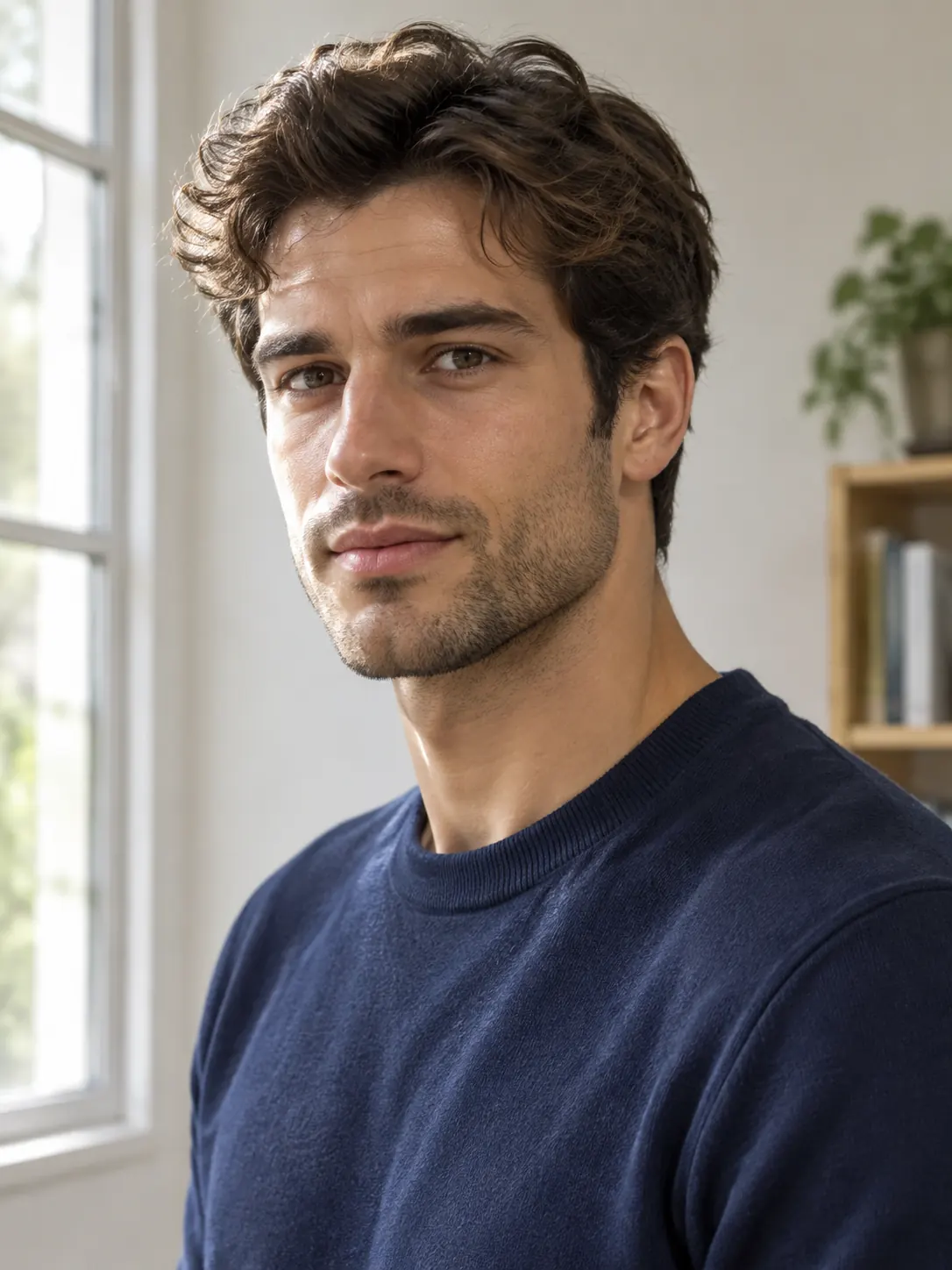 Studio
Three-quarter portrait with two-day stubble, window light left, 3:4
Try This Style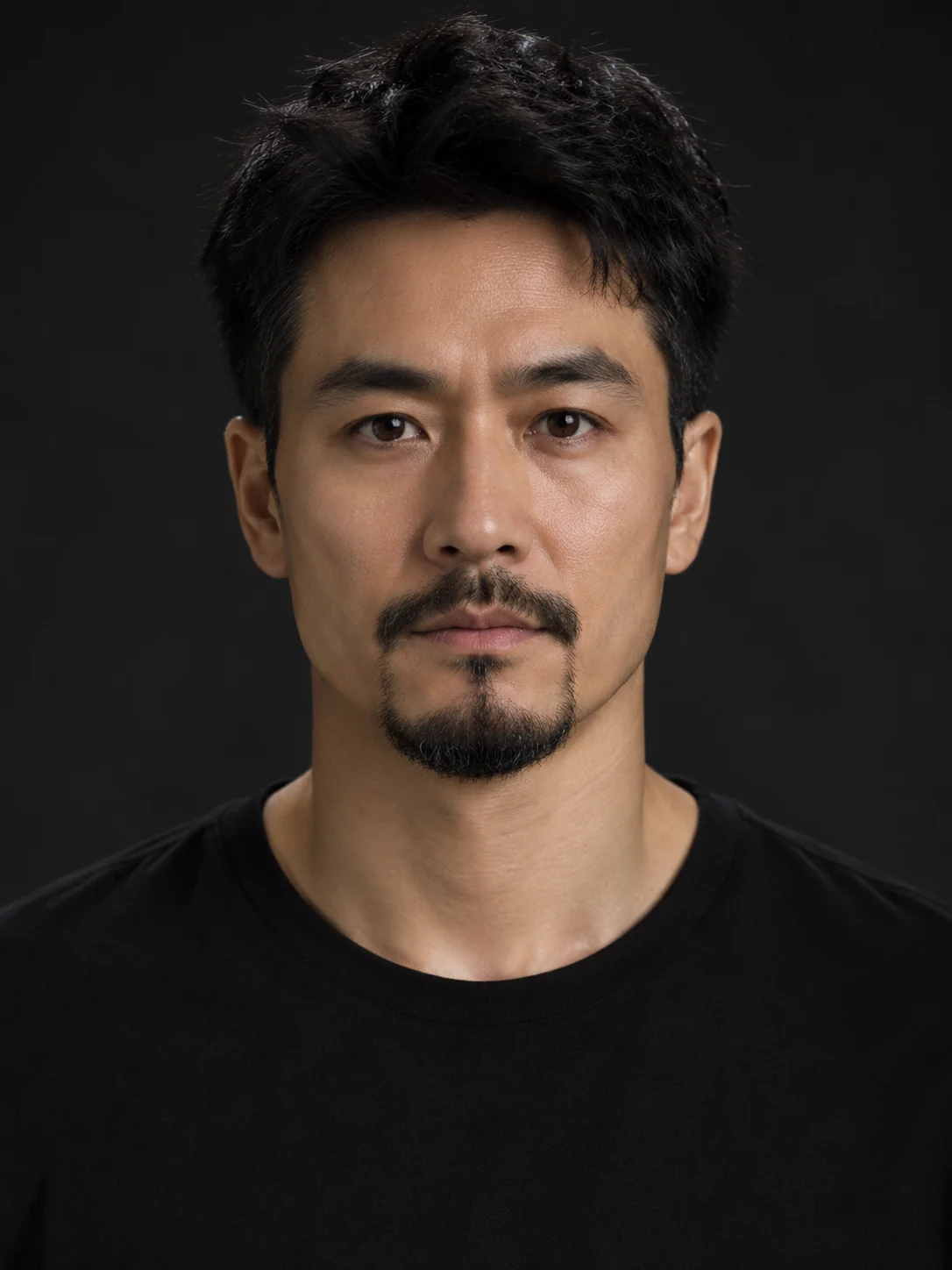 Studio
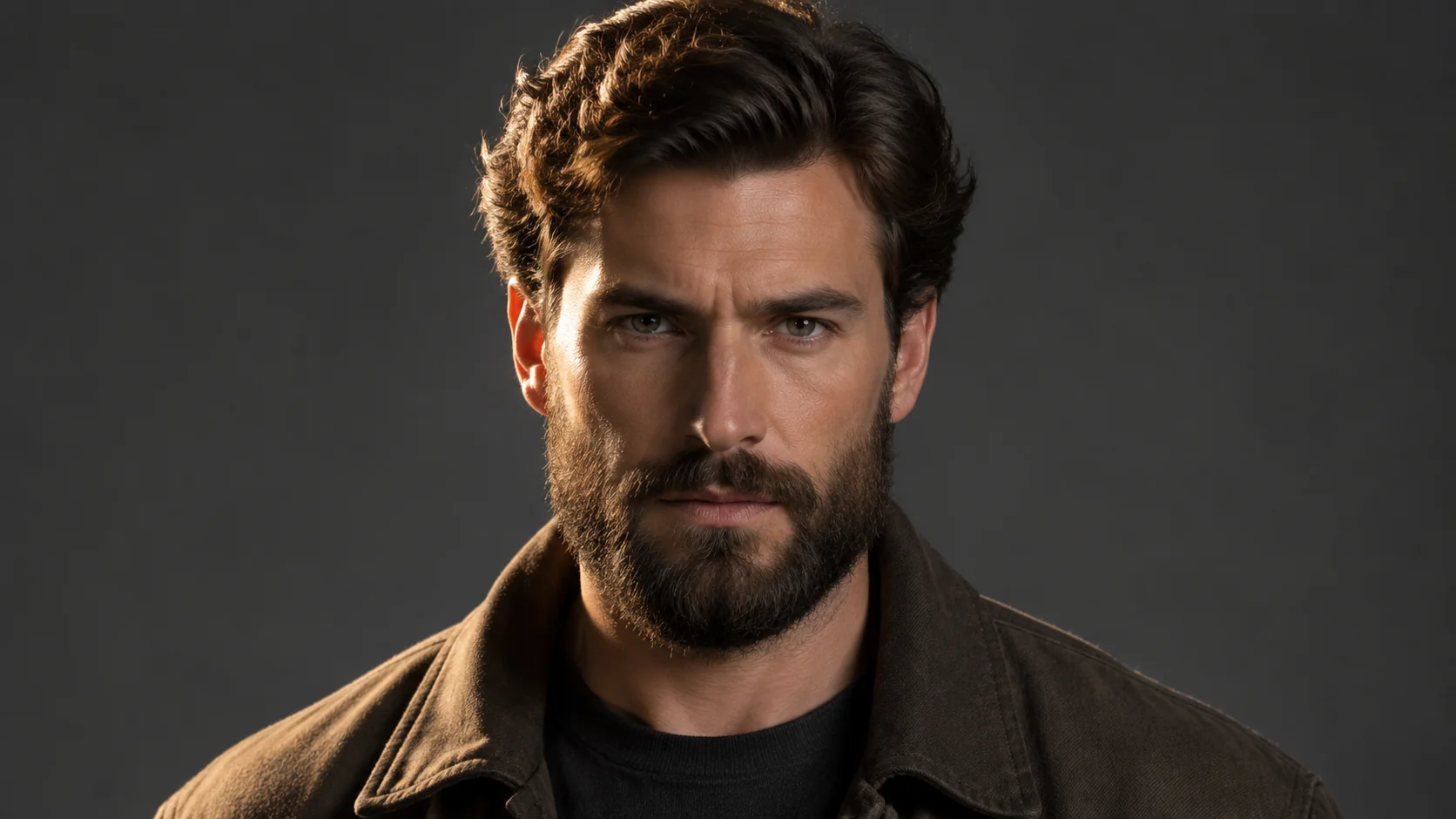
Front portrait with a goatee and shaved cheeks, softbox, dark ground, 3:4
Try This Style Character
Short beard with grey at the chin, older adult, soft side light, 3:4
Try This Style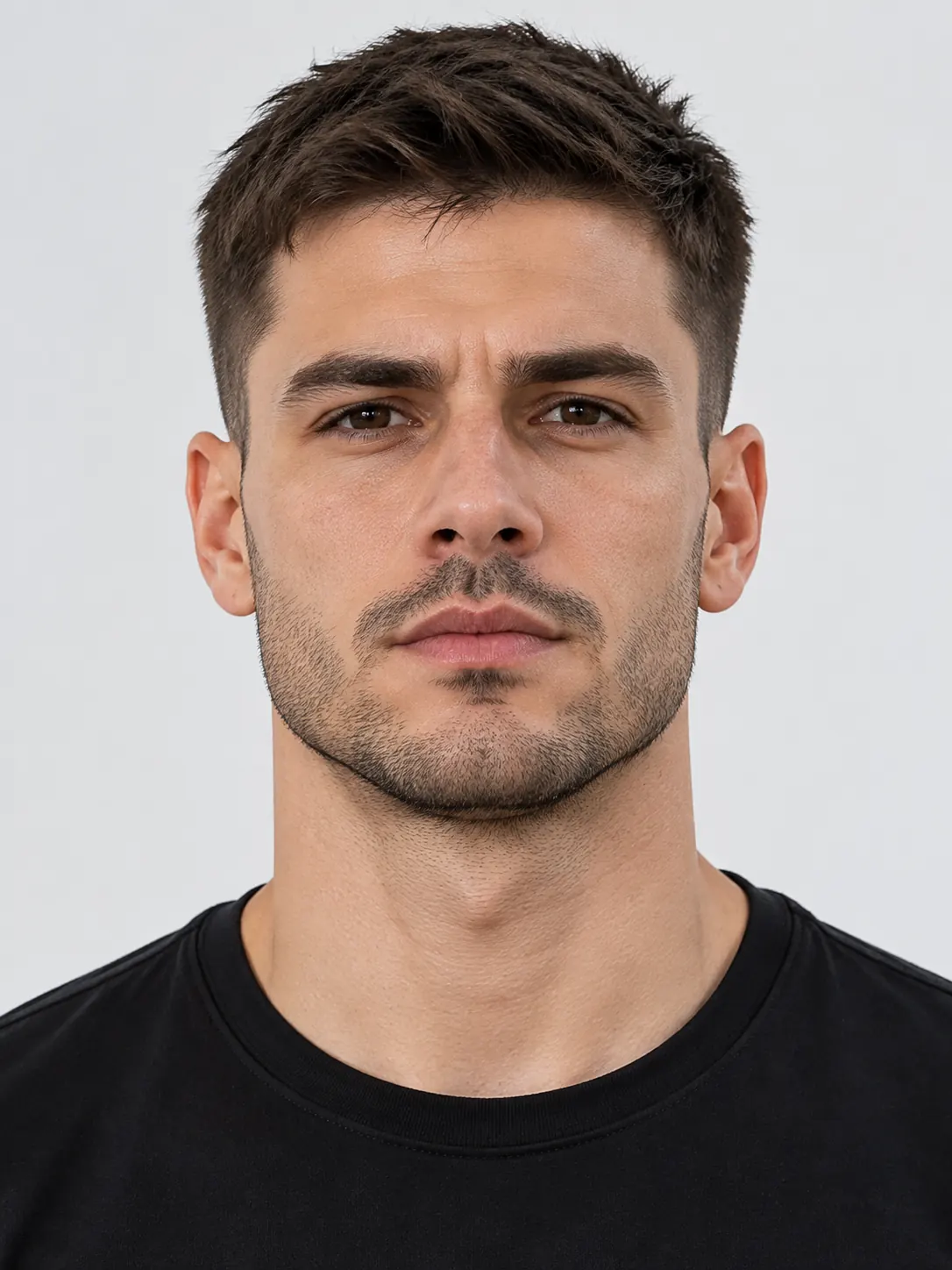 Character
Clipped short beard at 3 mm, sharp cheek line, flat daylight, 3:4
Try This Style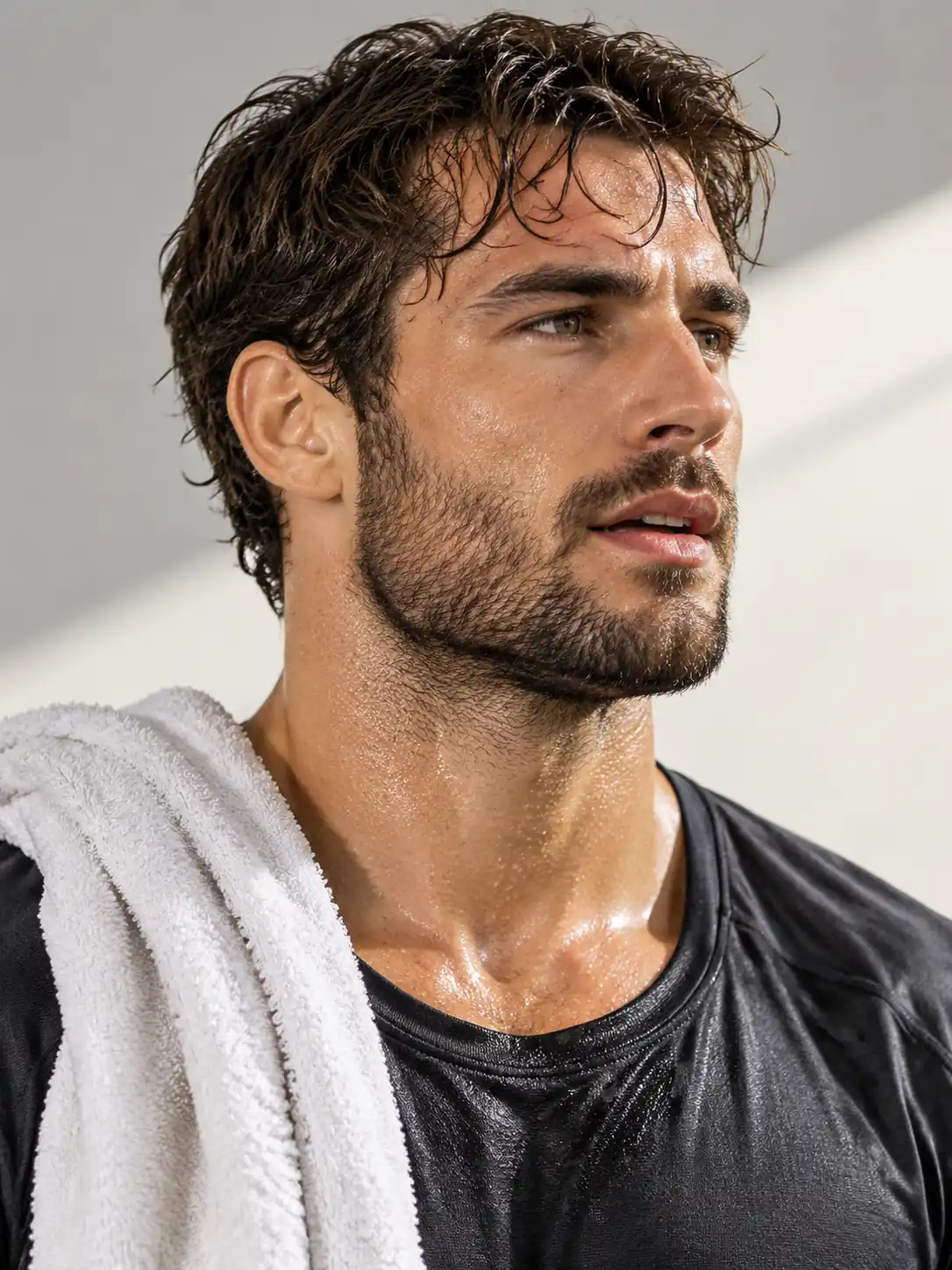 Character
Sweat-damp stubble after training, hard overhead light, towel on the shoulder, 3:4
Try This Style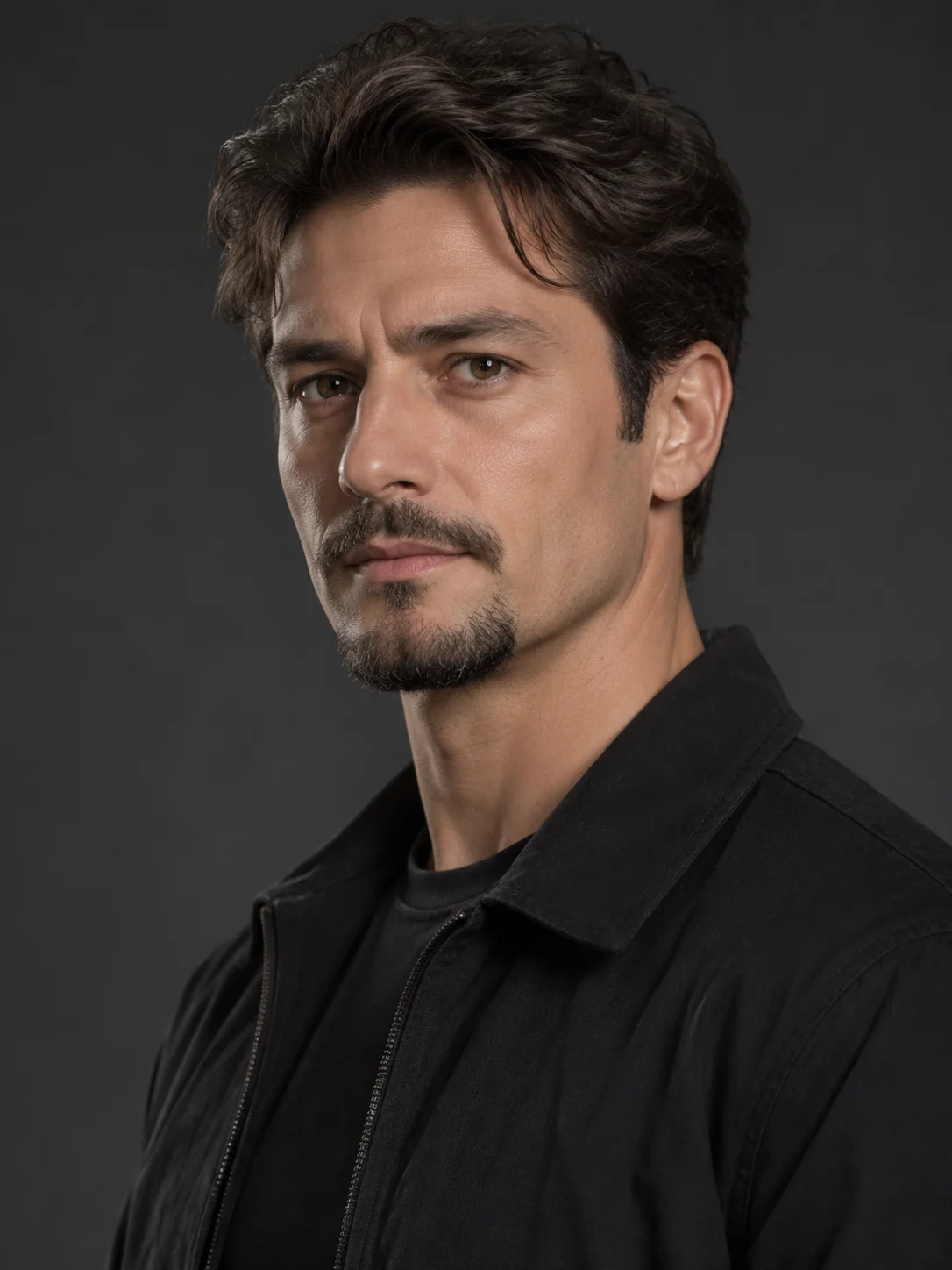 Scene
Fictional adult near forty with a trimmed beard, crow's feet, window light, 3:4
Try This Style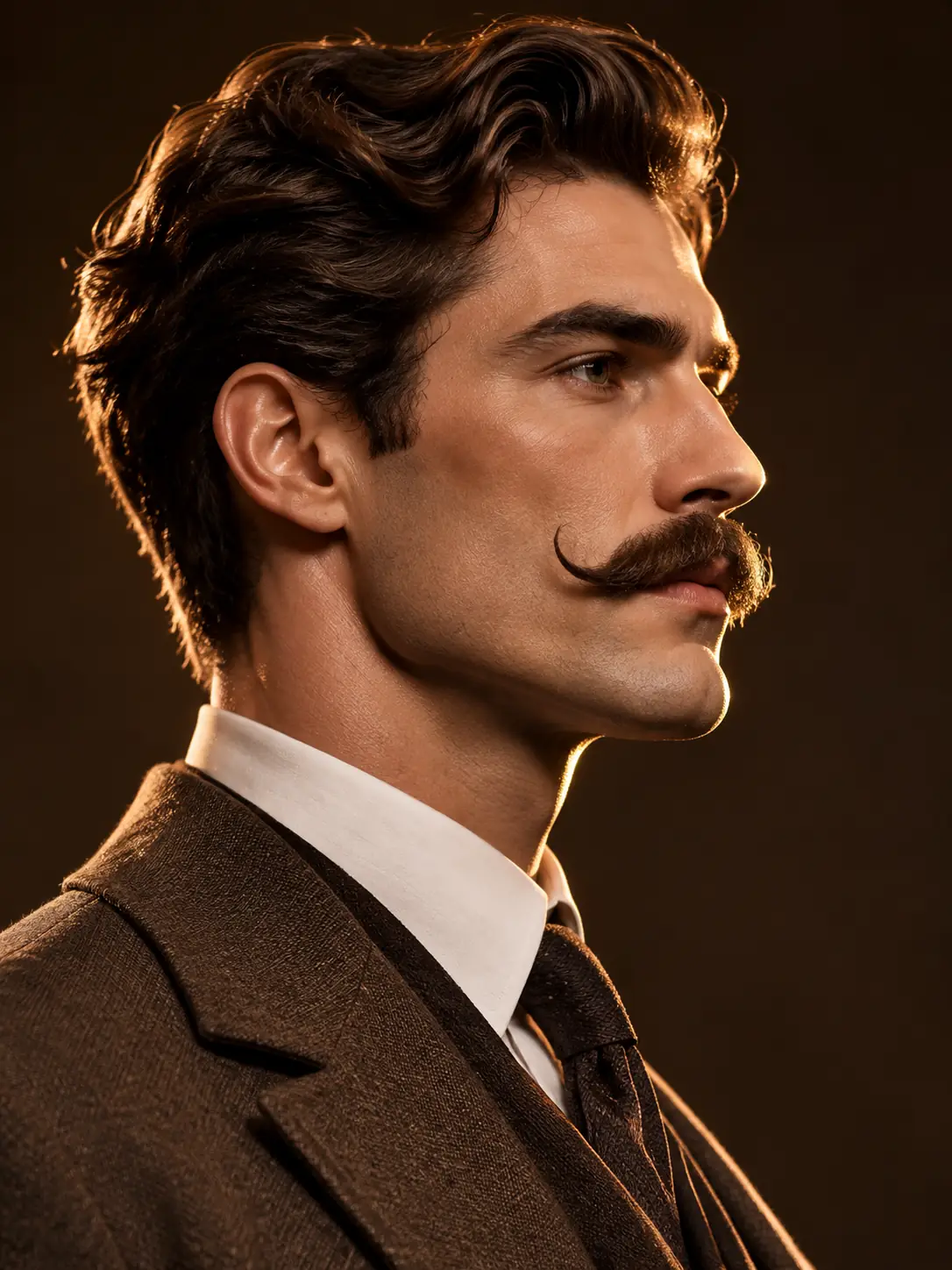 Scene
Close crop on a waxed handlebar moustache, hard side light, 3:4
Try This Style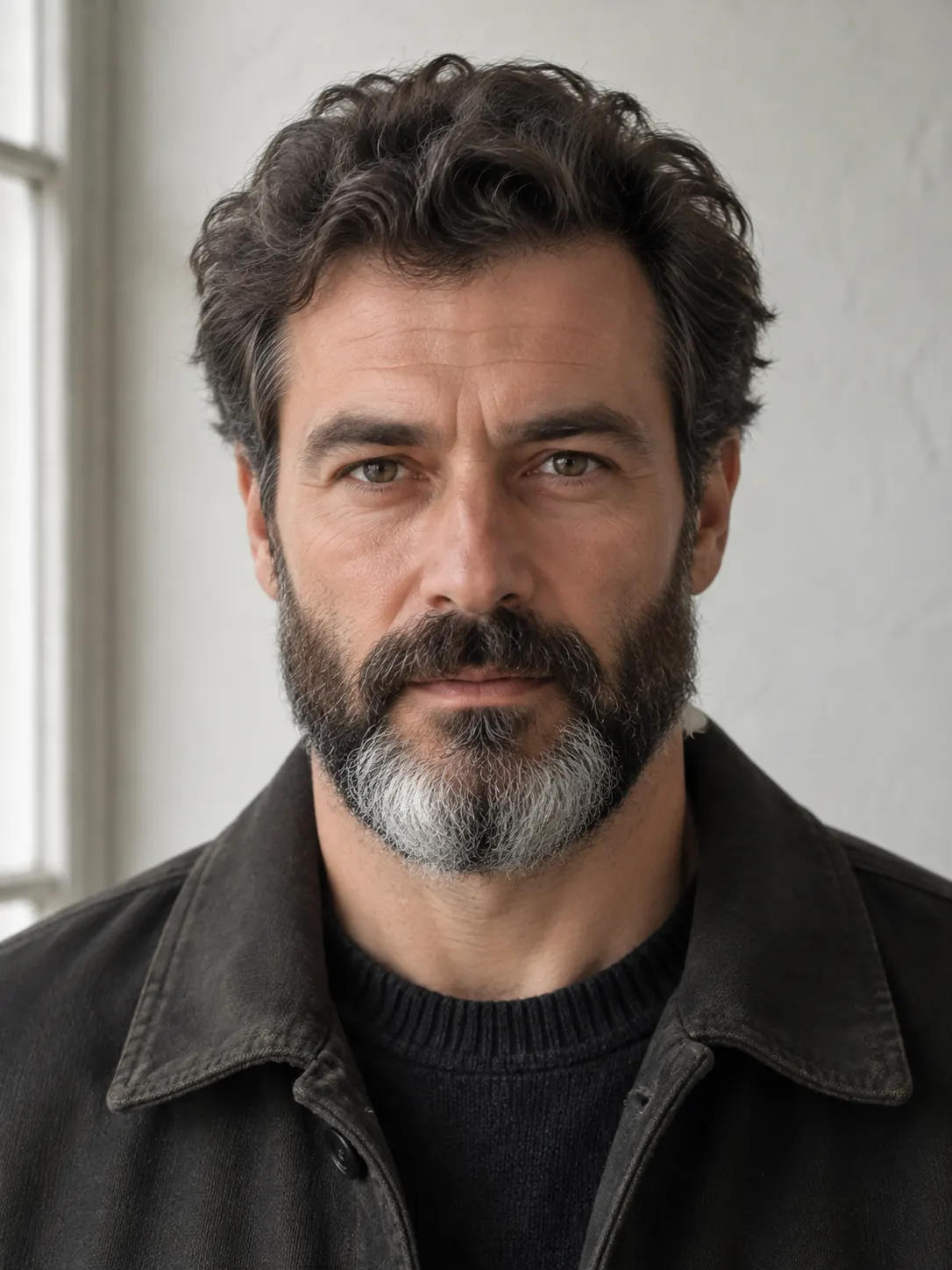 Detail
Full grey beard on a dark shirt, low warm light, 3:4
Try This Style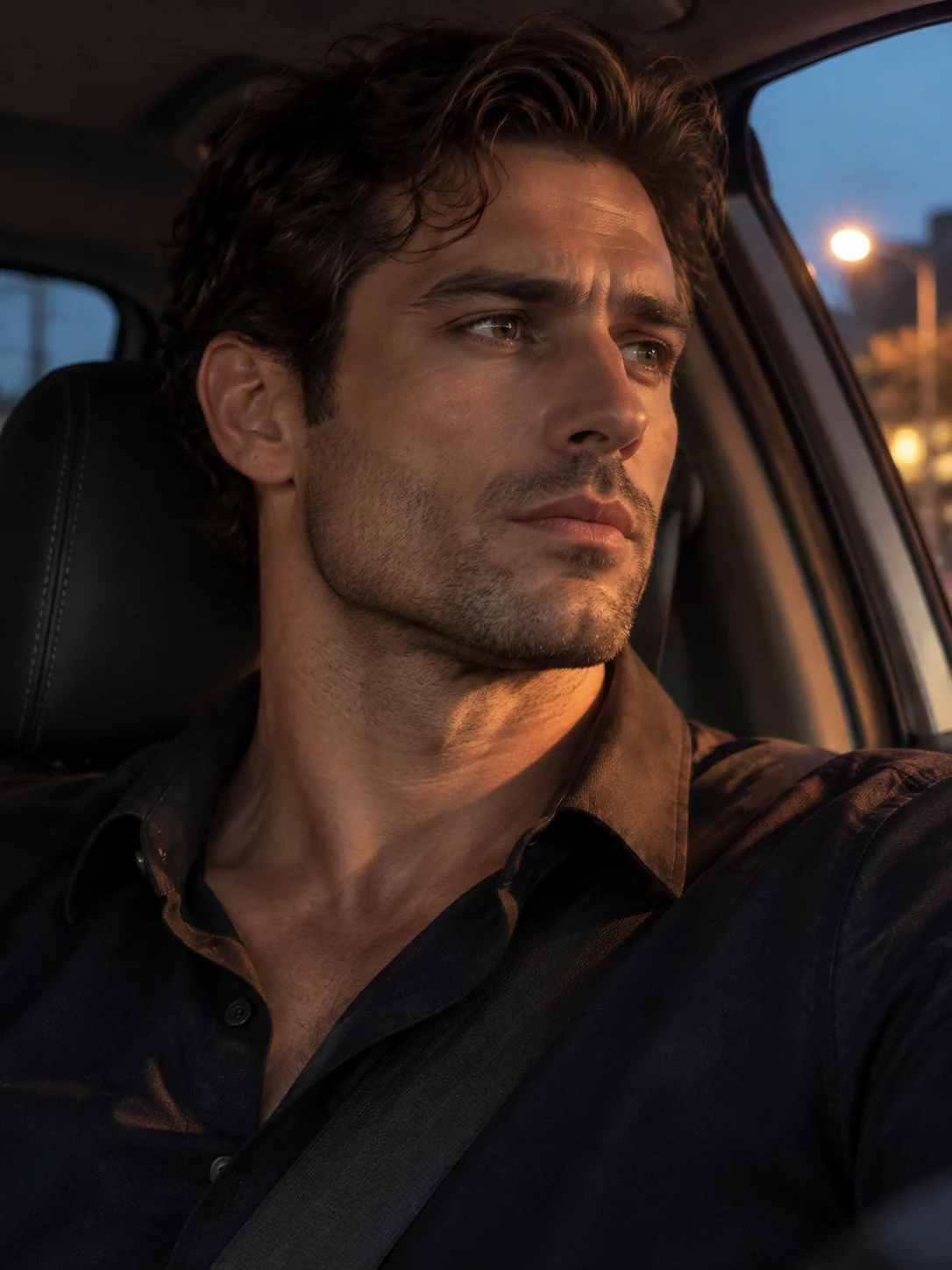 Detail
Beard backlit at golden hour, rim light along the jaw, 3:4
Try This StyleLength, edge and direction of growth do the work.
Four styles on one face is a decision. Four styles on four faces is a mood board, and it will not tell you which one suits your jaw.
Say individual hairs at the cheek line and a defined neckline. Without those two details a beard sits on the face like a painted shape.
A chin strap, a van dyke and a ducktail are specific shapes. Using the trade word gets a specific result, and describing the same thing in adjectives gets an average one.
Strong side light across the jaw shows coverage and density. Flat front light is flattering and useless, because it hides exactly what you are trying to see.
Two frames in the same crop settle an argument faster than one beautiful frame. Ask for the front and the profile of the style you are actually considering.
The render shows a shape, not your density. A patchy beard will still be patchy, and the image cannot tell you how fast the hair will fill in.
I had a beard for eleven years and wanted to know what a goatee would look like before I let a barber near it. Same face, same side light, four styles. I picked the short full beard and the barber agreed with the picture rather than with my description.
My first version looked like a marker pen outline. Asking for individual hairs at the cheek line and a shadow under the jaw is what made it read as hair, and that detail is what my barber actually used when he set the neckline.
I use it for character design, not for myself. Four shapes on one face is a fast way to find a look that fits a personality, though I would not trust it to show real density on a client who is deciding whether to grow one.
Yes, as a preview. Describe your face and the style, or start from a portrait you own. The result shows shape and coverage under one light, which helps a decision but does not predict how your own hair will grow.
Flat light and a soft jawline do it. Ask for side light across the jaw, visible individual hairs at the cheek line and a defined neckline. A beard needs a shadow under the chin to sit on a face.
No. You can describe the face instead, and nothing leaves your machine. If you do use your own portrait, keep it to yourself and treat the output as a private preview rather than something to post.
The first render is free in the workspace. Comparing several styles, larger files and faster models need a paid plan, and the free model is marked first in the picker. Compare the available AI image models before choosing a model for this image.
Yes, and that is the practical use. Ask for a side view and a front view of the same style, then point at the cheek line and the neckline in the chair. The image shows the shape, not the density you will get.