

Two Real Species
Each prompt names two animals that actually exist. A dragon has no skeleton to borrow, which is where most mashups stop looking like a creature.
Name two species and which half leads, and get an anatomy that keeps the skeleton, the weight and the skin transition believable.

Prompt Guide
Model
Reference Image
Four steps, two species per creature.
Use the real common names, such as red-tailed hawk and mountain lion. Vague pairs like bird and cat give the model nothing to attach anatomy to.
Say which animal owns the body and which supplies the head, limbs or extra feature. One dominant parent keeps the silhouette readable at thumbnail size.
Locate the join: feathers becoming scales along the shoulders, fur thinning into hide at the sternum. A named seam is what stops the two halves looking glued.
Save the first side-view render, then reuse it in image-to-image for a front or walking pose, so the same creature appears twice in a deck.
Action shots, grounded merges, clean anatomy plates and studio studies.
 Sky Hunters
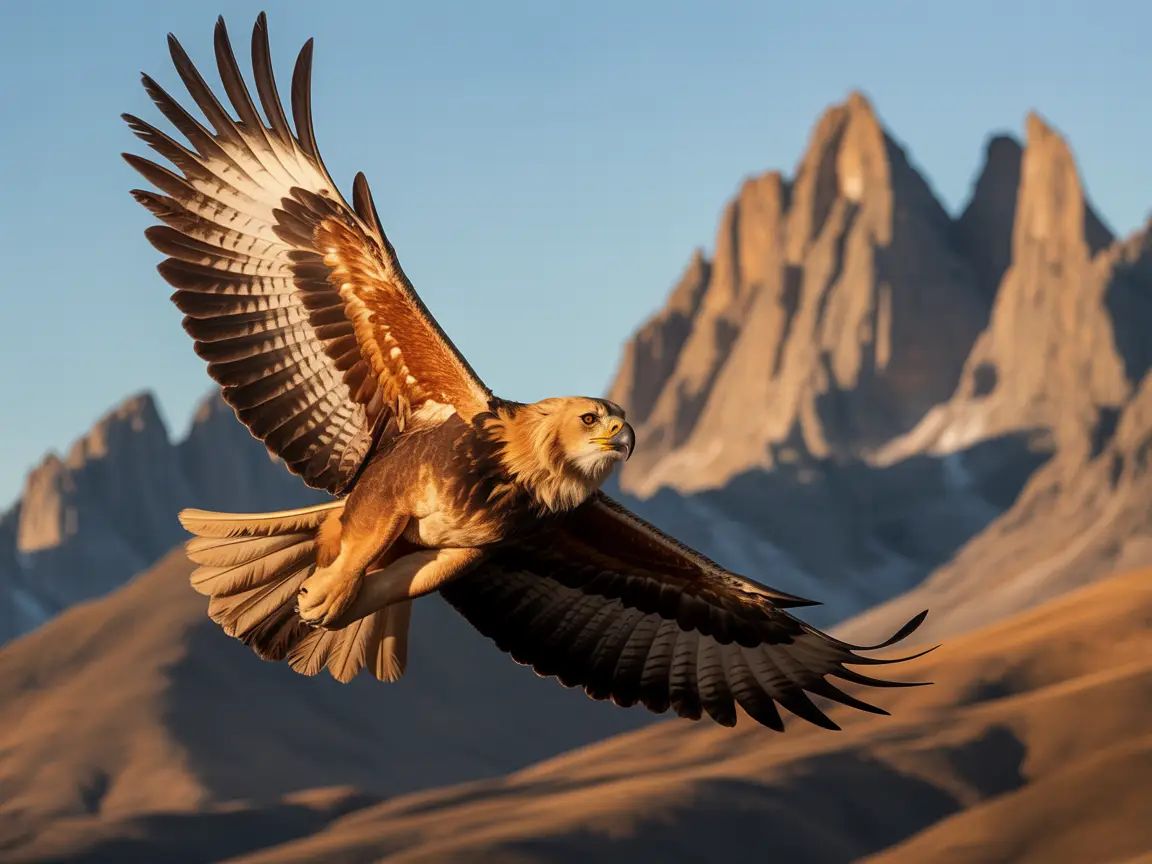
A tiger and eagle hybrid beats over a rainforest canopy, striped forelimbs tucked under barred wings, eagle head with small rounded tiger ears, humid morning haze, 3:4
Try This Style Sky Hunters
An eagle and leopard hybrid perches on a canyon rim at sunrise, spotted forelimbs and a long spotted tail below folded barred wings, hooked raptor beak, 3:4
Try This Style Ground Merge
An elephant and sloth hybrid stands in a dripping rainforest, thick moss-green fur growing across the back and shoulders, wet dark hide, low mist, 3:4
Try This Style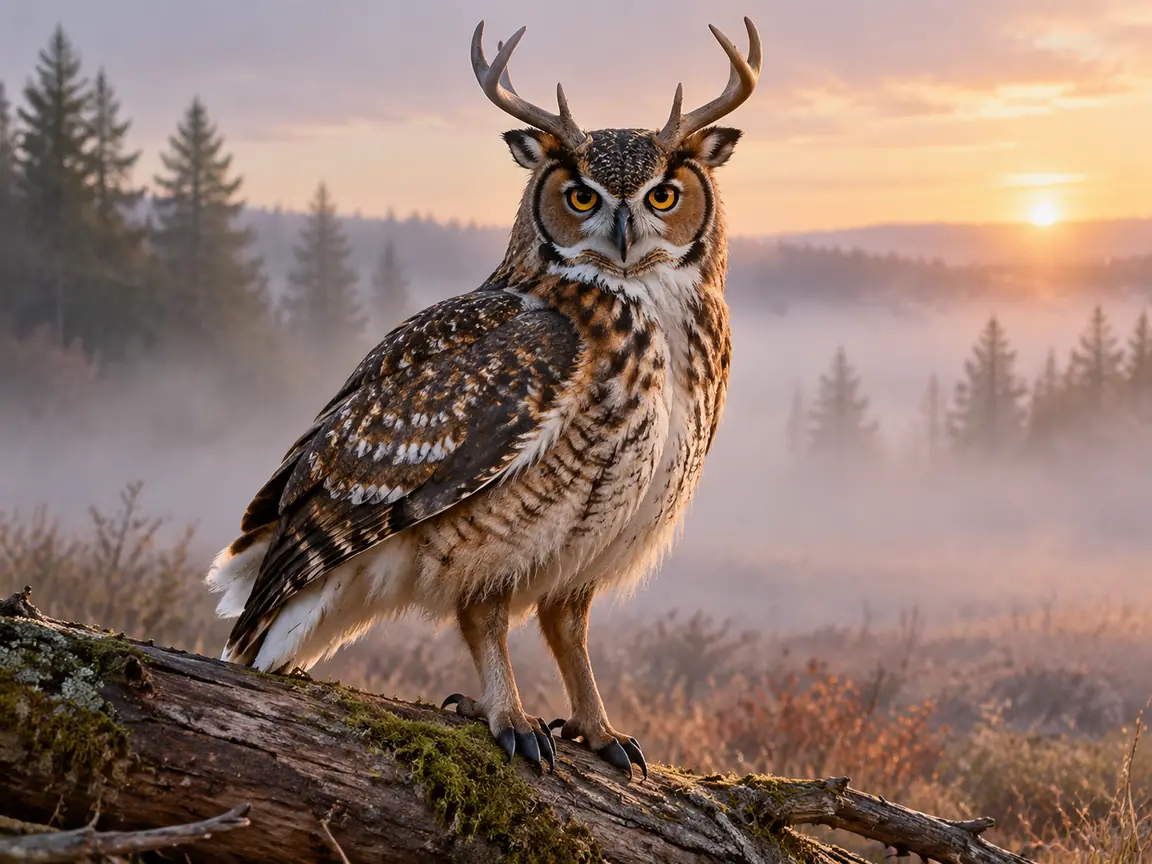 Ground Merge
A great horned owl and white-tailed deer hybrid perched on a fallen log, small deer antlers rising above the owl's facial disc, feathered chest, dawn mist, 3:4
Try This Style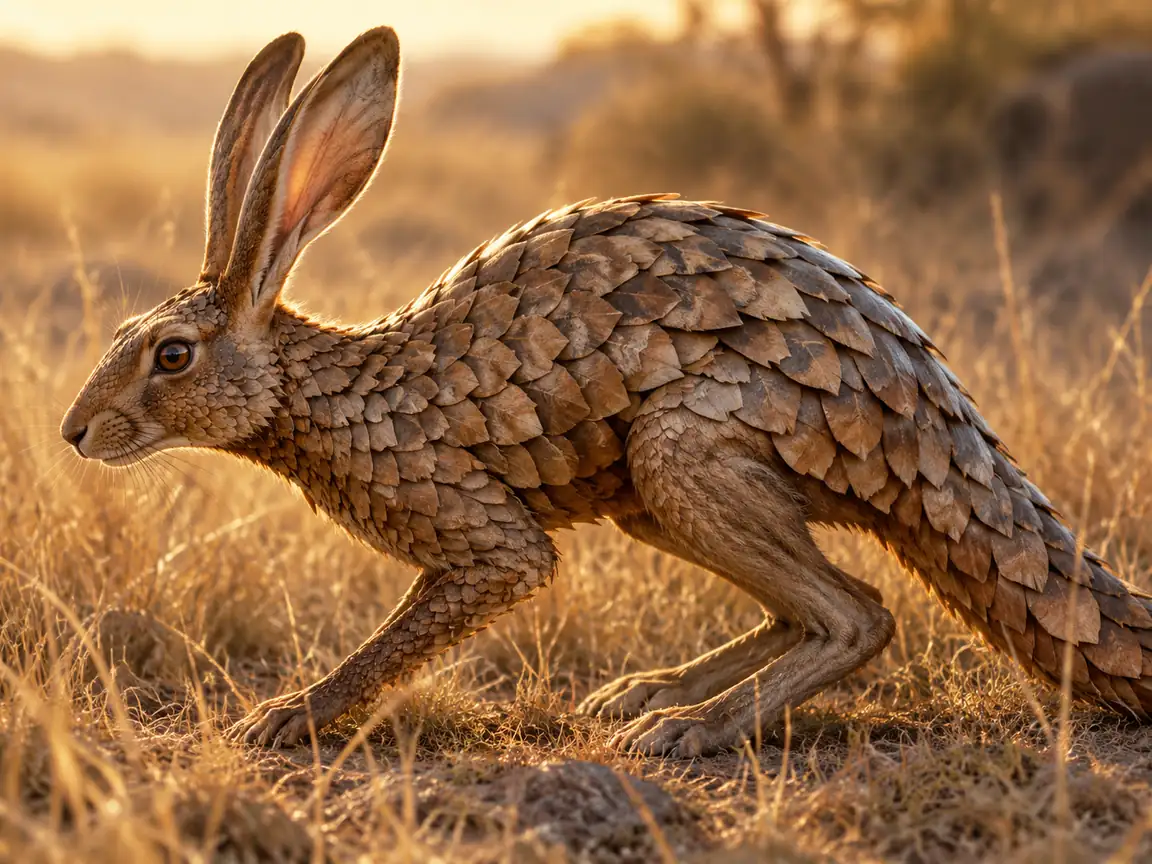 Ground Merge
Side view of a pangolin and hare hybrid crouched in dry grass, long hare ears and muscular hind legs under overlapping pangolin scales, low golden light, 3:4
Try This Style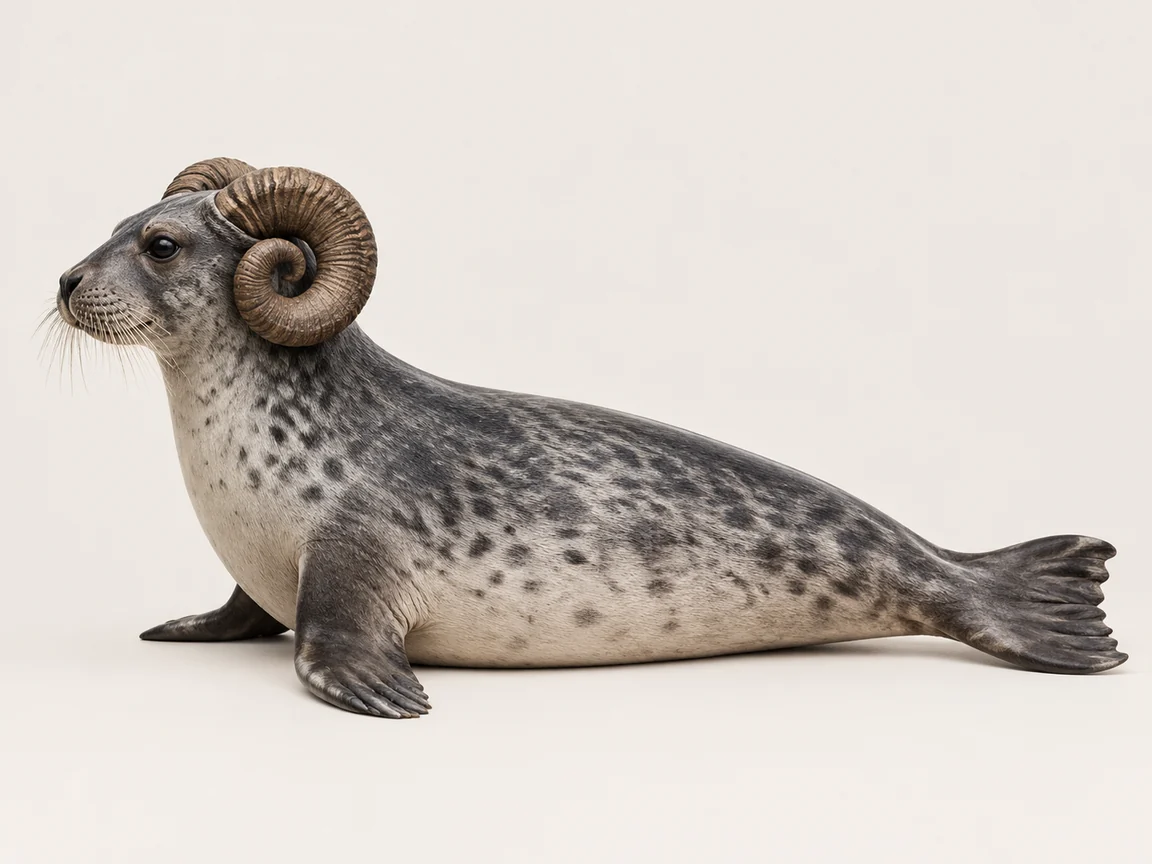 Anatomy Study
Side view of a grey seal and ram hybrid on a seamless pale backdrop, curled ram horns beside a seal's whiskered muzzle, streamlined body, even studio light, 3:4
Try This Style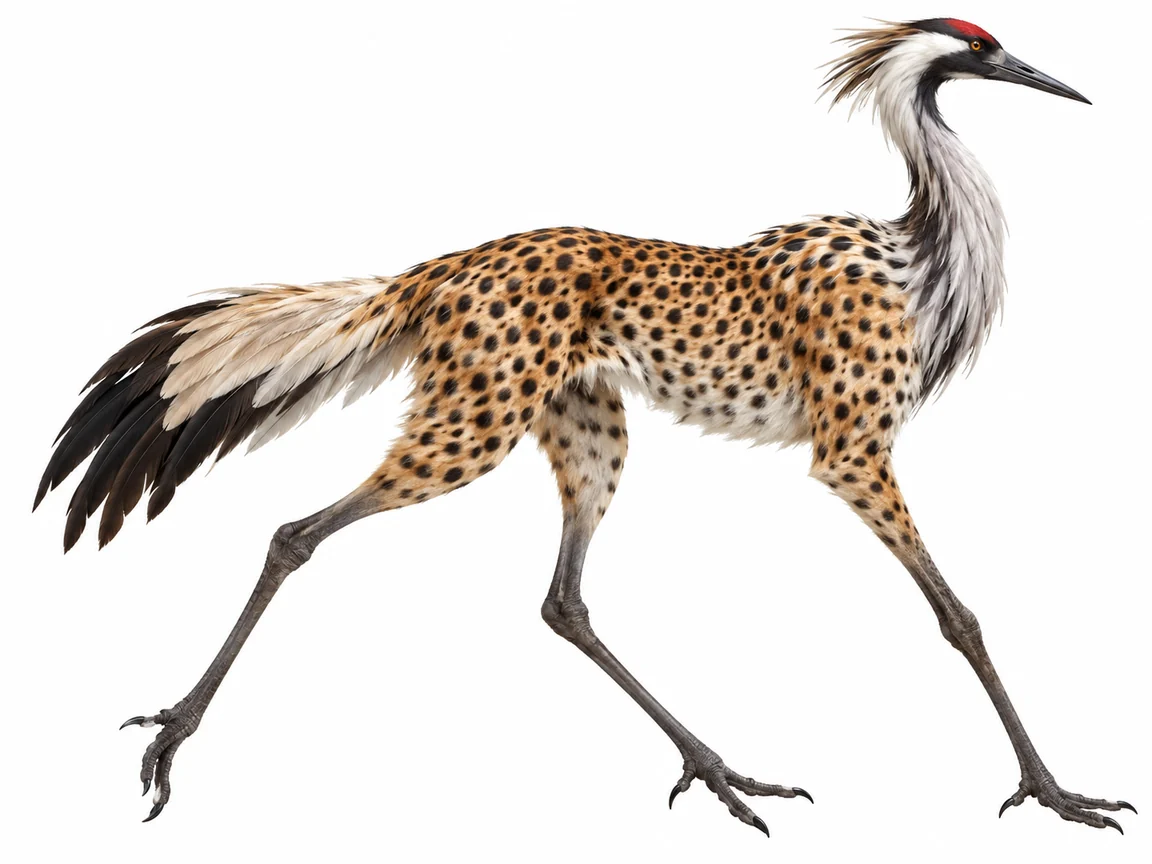 Anatomy Study
Full-body side view of a crane and cheetah hybrid mid-stride on plain white, long crane legs under a spotted feline torso, feathered neck and spotted withers, 3:4
Try This Style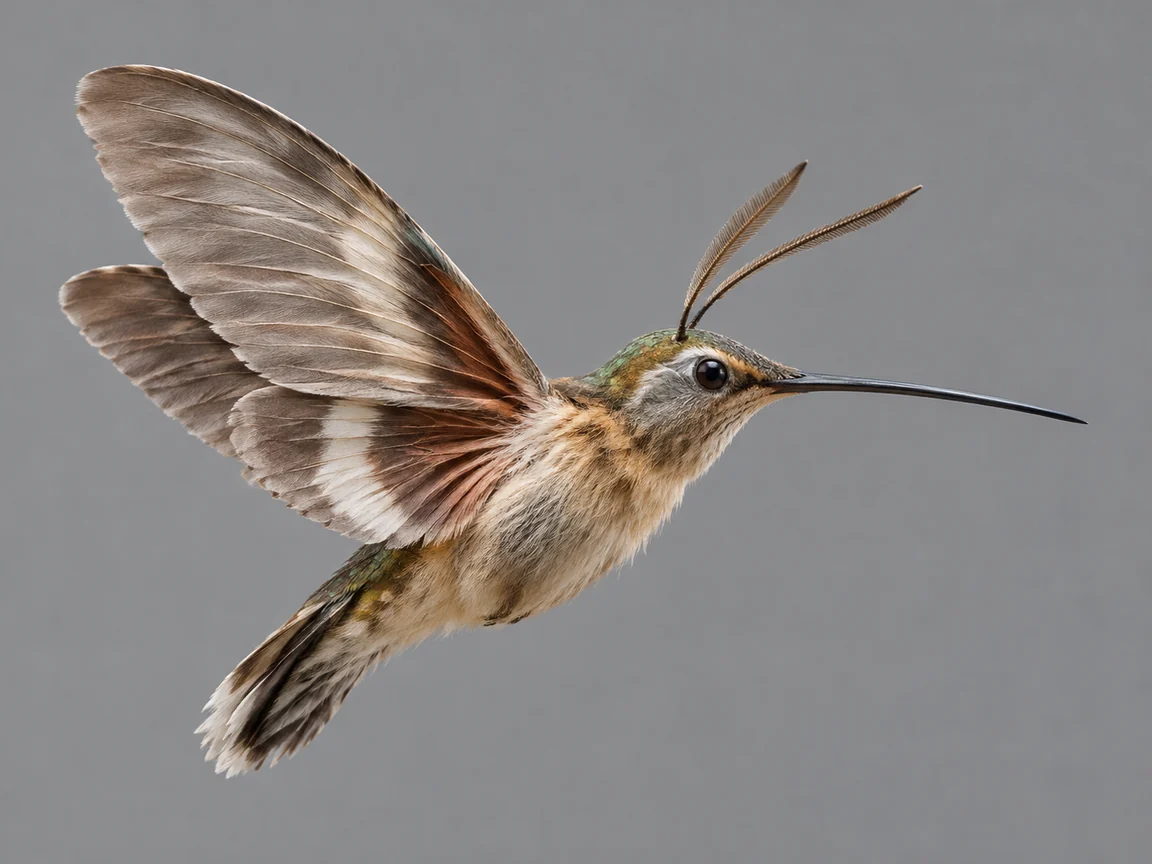 Anatomy Study
Side view of a hummingbird and moth hybrid hovering against flat grey, feathered wings and a furred thorax, wings frozen mid-beat, soft even light, 3:4
Try This Style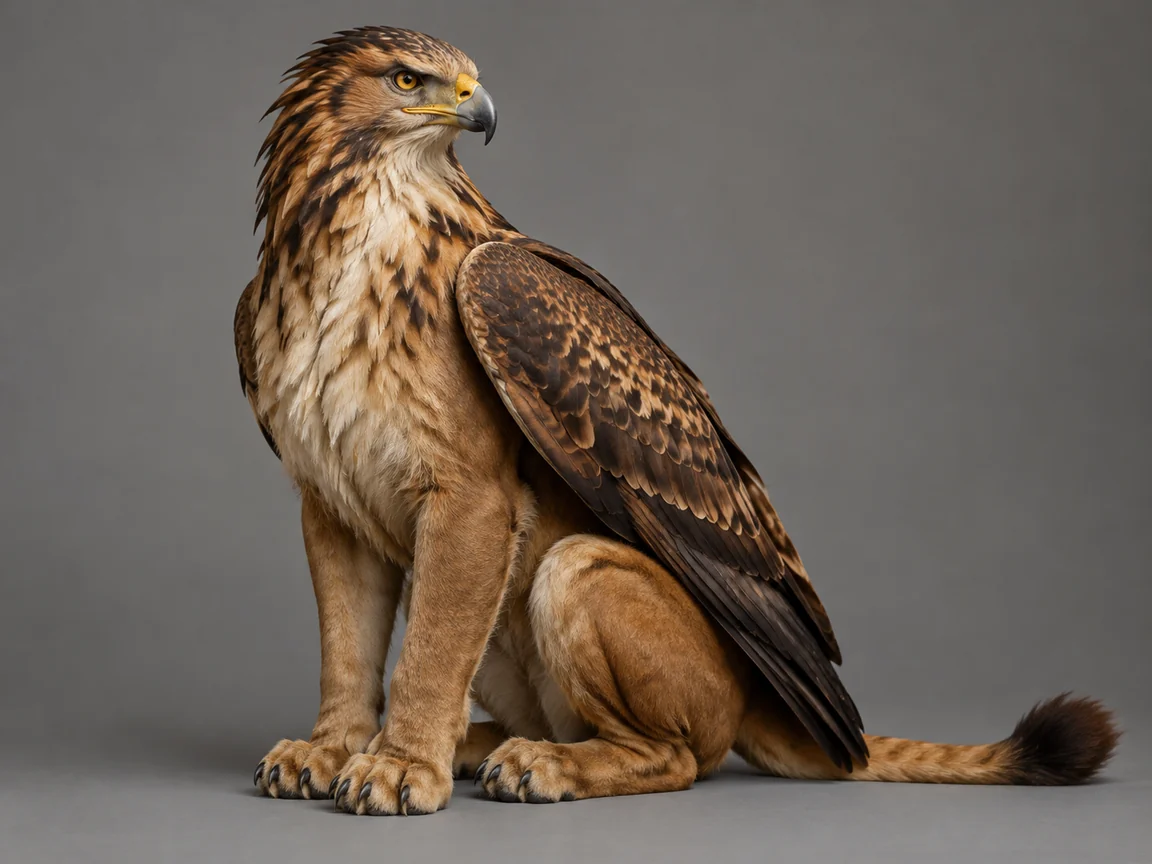 Studio Plate
A hawk and lion hybrid seated on a seamless mid-grey studio sweep, wing folded against a tawny flank, three-quarter view, softbox from the left, 3:4
Try This Style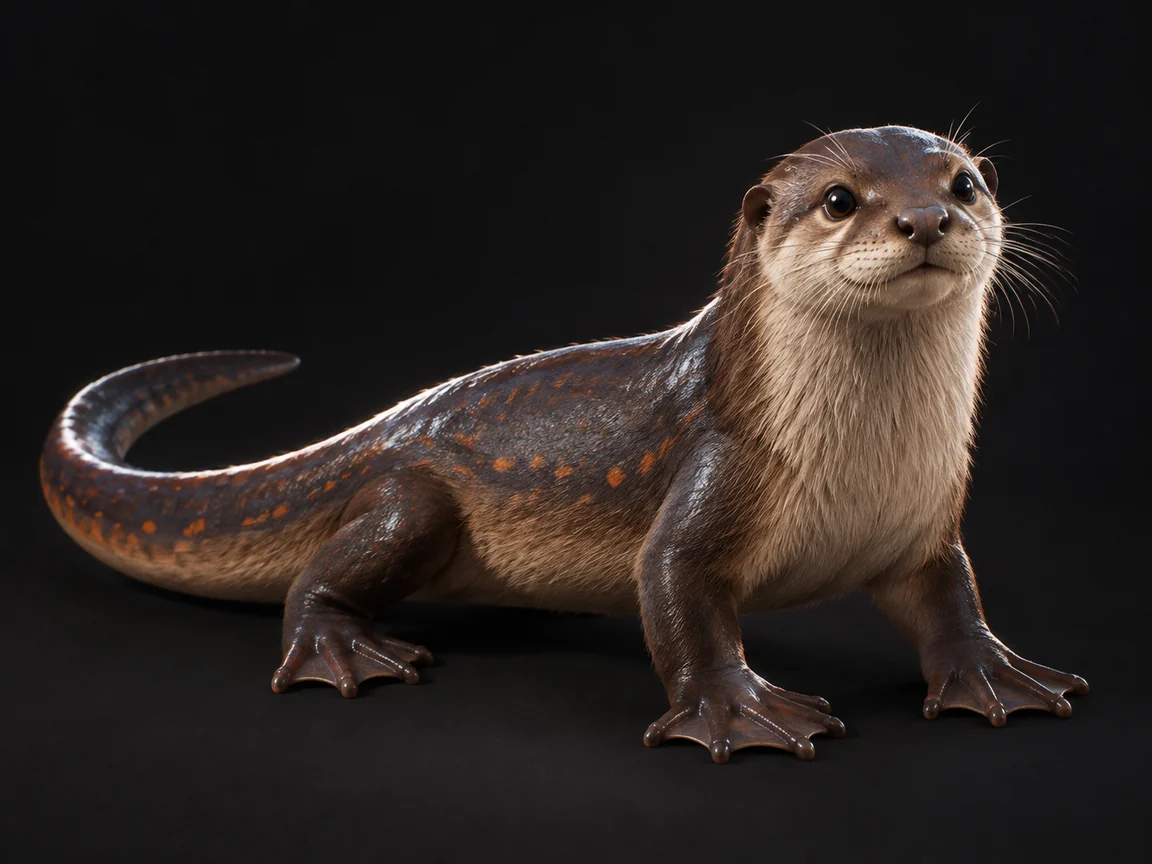 Studio Plate
An otter and newt hybrid on a dark seamless sweep, smooth amphibian skin along the back with otter fur on the chest, webbed paws, rim light, 3:4
Try This StyleSix constraints we apply to every creature.
Each prompt names two animals that actually exist. A dragon has no skeleton to borrow, which is where most mashups stop looking like a creature.
One parent owns the body mass and the other supplies a feature. Switching which one leads is the fastest way to get a second, different design.
Describe one transition band, such as feathers thinning into fur at the shoulder. Without it the render draws a visible edge like a costume join.
If the legs came from the smaller animal, match leg mass to torso mass in the wording, or the creature will look like it is floating.
A side view or a walking pose shows the join honestly. A curled sleeping pose hides the flaws, and also hides whether the design works.
Studio versions stay on a seamless sweep with no labels or callouts, so the image can go straight into a pitch deck without editing.
I needed a sky hunters concept the same afternoon I found this page. I typed what I wanted for "Rainforest Wing", ran it twice, then changed only the light and the palette on the second pass. The version I kept went straight into a client deck and saved me a stock-photo search.
My first try for "Scaled Hare" came back too polished, more advertising than real photograph. I rewrote the sentence to describe the surface and the actual light in the room, and the third attempt looked like something I could have shot myself. That is the one I still use for ai animal hybrid generator mockups.
I use it the way I use a sketchbook: one prompt for "Crane and Cat", one for "Hover Moth", then I pick the half that works and iterate from there. Two of those frames ended up in a package for a client who could not decide between the two directions, and seeing them side by side settled it in a minute.
Yes. Name both species and say which half leads, for example the head and forequarters of a red fox with the build of a deer. Without that instruction the model tends to paste two whole animals side by side.
Because the prompt describes two bodies. Ask for one skeleton, one weight, one coat that transitions across the shoulders, and name the habitat so the animal has to stand somewhere.
Say wildlife photography, overcast light, 200mm lens, natural habitat. Cartoon comes from the word hybrid plus a fantasy setting, so drop the fantasy and keep the biology.
An original creature can be fine if the model licence allows it. Avoid anything that reads as a trademarked creature, and avoid basing it on a living person's pet without permission.
You can generate on the free allowance, and paid models start around $5.80 a month with watermark-free downloads.